
Nikro Air Duct Cleaning in South Hill: A Homeowner’s Guide
A contractor can show up with a $15,000 Nikro portable unit and still leave most of your duct system untouched if they skip branch-line agitation and proper register sealing. The machine pulls air and traps debris in a HEPA filter – that’s the easy part. What matters is whether anyone cut the right access points, ran agitation tools through every branch run, and then actually checked the work with a camera. This guide walks through what Nikro equipment really does inside South Hill homes, and what to verify before you assume the job was done right. If you’d rather have someone handle it, call (855) 510-1735 for a free estimate.
What does Nikro equipment actually do inside your ducts?
Nikro negative-air machines create a pressure differential. The unit connects to your main trunk line, pulls the system into negative pressure, and filters everything it captures through a HEPA-rated filter before the air leaves the machine. Debris loosened upstream gets pulled toward the vacuum instead of drifting into your living space. That’s the mechanical principle, and it’s a sound one – provided the vacuum is actually strong enough to move air through the whole trunk.
Airflow capability is where cheap equipment falls apart. A shop-vac with a hose adapter moves a small volume of air through a narrow opening. A Nikro portable unit runs in the range of commercial-grade CFM, enough to establish measurable negative pressure across a typical South Hill split-level. Without that pressure, agitation just throws dust into the air and it settles back where it started. With it, loosened debris travels toward the capture point.
The HEPA stage matters just as much. Duct contents in South Hill homes often include renovation dust from remodels, pest debris, and settled allergens that have accumulated over years. A vacuum that exhausts that material back into the room isn’t cleaning – it’s relocating. HEPA-rated filtration on the exhaust side is what keeps contaminants inside the machine.
How many access points should a real Nikro job require in South Hill?
Every duct system needs cuts – there’s no way around it. A proper Nikro cleaning on a typical South Hill split-level usually requires access at the main trunk, at every major branch takeoff, and at strategic points along longer runs so the agitation tools can reach the far ends. That’s typically a dozen or more access points on a standard single-family home, not two or three.
If a technician shows up, drills two holes near the furnace, runs a hose in, and calls it done, the branch lines never got cleaned. A few things to check when you get a quote:
- Ask how many access points they plan to cut. A vague answer, or a number under six for a whole-house job, is a red flag.
- Ask how they’ll seal the cuts afterward. Every access hole should be closed and sealed before they leave.
- Ask whether they agitate branch runs, not just the trunk. Vacuum alone doesn’t break debris loose from branch walls.
- Ask whether register covers come off. A proper job includes sealing registers so the vacuum pull doesn’t leak around the edges.
Access point count is the single most revealing question you can ask during a quote. It tells you whether the contractor is planning a whole-system clean or a token pass through the main trunk.
Why agitation tools matter as much as the Nikro vacuum
The Nikro unit is the capture end. Agitation is the dislodge end. Skip agitation and you’ve got a powerful vacuum pulling on dust that’s still stuck to the duct walls. That’s why real contact-cleaning setups pair negative-air equipment with mechanical tools designed to physically scrape and knock debris free from every surface.
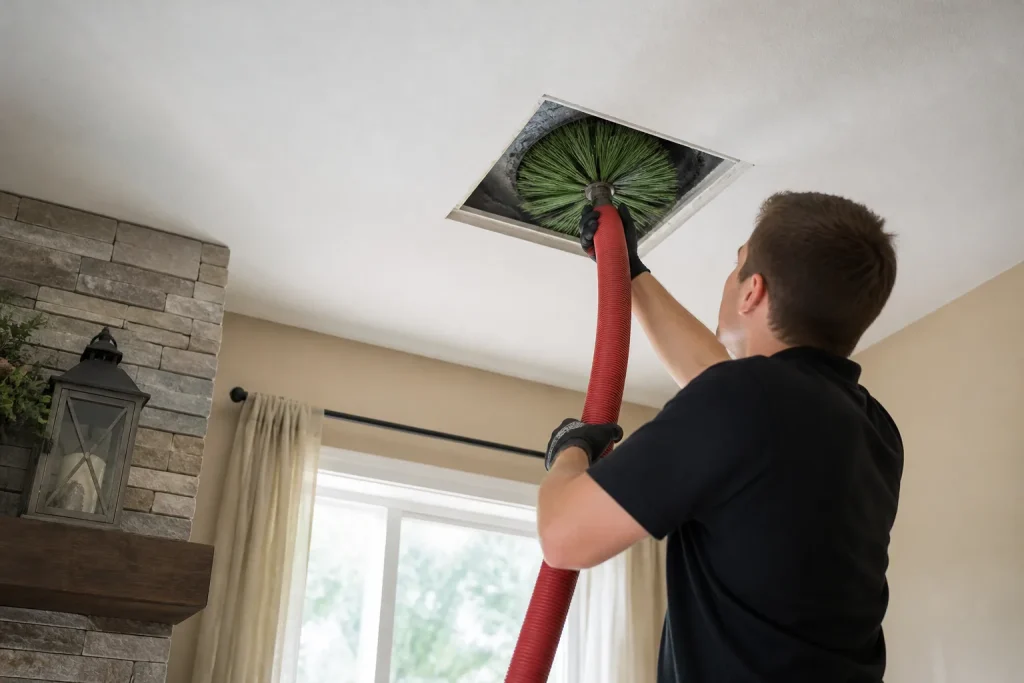
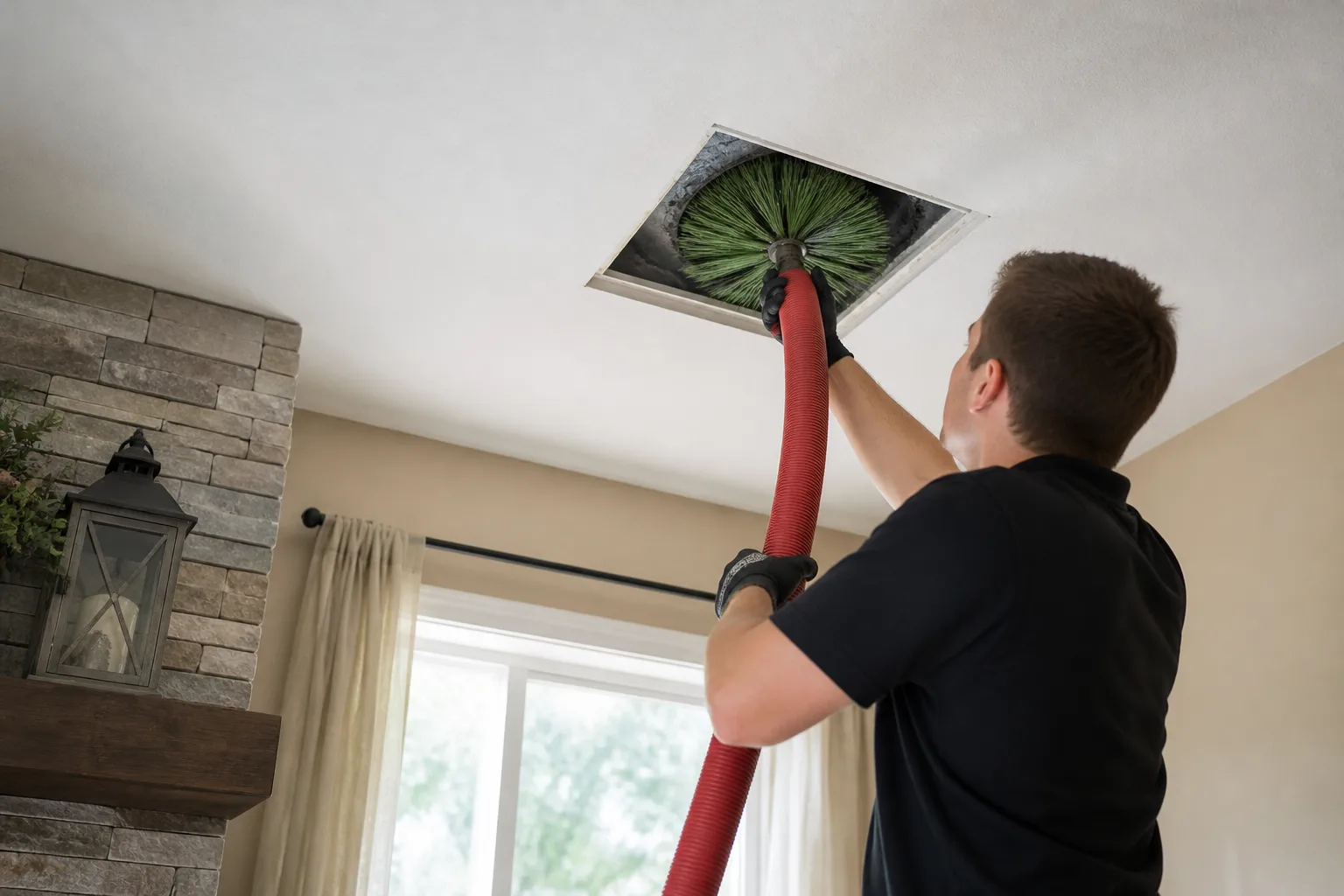
In a full-system clean, the technician runs agitation tools through the trunk and each branch line while the Nikro vacuum holds the system under negative pressure. Skipper balls, air whips, and rotary brush heads are common agitation tools, each suited to a different duct type and diameter. Flexible brush heads from a South Hill Air Duct Cleaning professional can reach around bends and into branch runs that a straight hose can’t. The agitation knocks debris loose; the vacuum pulls it out; the HEPA filter captures it.
Rotobrush rotary contact-cleaning systems are one example of the agitation side done properly – brushes physically scrub the duct walls while the vacuum captures what comes off. When a company pairs agitation and negative air in that sequence, the result is a real clean. Miss either half, and you either dislodge debris into the air or leave it stuck to the walls.
The pattern most South Hill homeowners run into isn’t a bad machine – it’s a technician who skipped agitation because it takes longer and costs the operator more labor.
How do you verify a Nikro pull actually cleared the main trunk lines?
Camera inspection is the honest answer. A post-cleaning camera pass through the main trunk and a sample of branch runs shows the homeowner exactly what changed. Without a camera, you’re trusting the operator’s word. With one, you see the walls, the joints, and the branch transitions before and after.
What to look for in a post-job inspection:
- Clean trunk walls. The interior surfaces of the main trunk should be visibly clear of settled dust.
- Clean branch transitions. Debris tends to collect where branch runs meet the trunk. Those joints should show clean surfaces.
- No standing material in low points. Duct runs that sag slightly trap debris; those sections should be clear after a proper pull.
- Sealed access holes. Every opening cut for access should be closed and sealed before the technician leaves.
- Before and after photos. A confident operator will show you both. If they only show “after,” ask for the “before.”
We document conditions before and after on every job. When the customer can see the difference for themselves, nobody has to take anyone’s word for it – and if a call ever comes later, the record exists. For a deeper look at what full air duct cleaning includes beyond the vacuum pass, our service page lays out the whole sequence.
When does cleaning need to be followed by duct sealing?
Nikro cleaning doesn’t fix leaks. A vacuum removes debris; it doesn’t close gaps. Duct leakage is a separate problem, and a common one in South Hill homes – especially older split-levels and homes that have been added onto where the duct system was extended to reach new rooms. A leaky joint lets treated air escape into a crawlspace or attic and pulls unconditioned air back into the supply lines. Cleaning can leave a system spotless and still leaky.
Signs a cleaning needs a sealing step next:
- Rooms that never quite heat or cool evenly, even after the ducts were cleaned
- Visible gaps, tears, or disconnected sections found during the cleaning pass
- Dust settling on horizontal surfaces faster than it should
- Higher-than-expected energy bills with no other explanation
Most duct cleaning companies note the leaks and refer the repair out. Ask up front whether the company handles duct repair and sealing in-house or hands it to a separate contractor. When we find a leak or disconnected section during a clean, we repair and seal it the same visit – one job, one visit, no second appointment.
How to read a quote and spot a hollow Nikro job
The word “Nikro” on a quote is not the same as a whole-system clean. A few questions separate a real job from a token pass:
- How many access points will you cut? Expect a dozen or more on a typical South Hill split-level.
- What agitation tools are you running in the branch lines? A vague answer here means the branch runs are getting skipped.
- Do you seal every access hole afterward? Every hole cut should be closed and sealed.
- Will I get before-and-after photos? A yes with a documented process is a good sign.
- Will you inspect the main trunk by camera after the pull? A camera pass confirms the trunk lines actually cleared.
- Do you handle duct sealing in-house? If they refer it out, that’s a second contractor and a second visit.
One flat price agreed before work starts, per system, is the standard we hold ourselves to. No per-vent math, no surprise line items once the technician is already on site. Ask for the written scope before anything is cut.
When to call a pro: if you’re seeing musty odors, uneven airflow, or dust that returns faster than it should, a camera-and-vacuum pass is usually the fastest way to find out what’s actually going on in the ducts. Ductwork runs behind walls and through crawlspaces; the tools that reach it are not homeowner-grade. You can handle filters and register covers yourself – the rest is best left to a trained technician with the right access equipment.
Related services in South Hill: if the ducts are clean but the dryer is venting slowly or you’ve noticed lint buildup behind the dryer, dryer vent cleaning is a separate system worth scheduling on the same visit. And if the HVAC cabinet and blower are holding dust, HVAC cleaning handles that side of the system.
The Bottom Line
A Nikro vacuum is a serious piece of equipment. What makes a cleaning effective is what happens around it: how many access points get cut, whether agitation tools actually reach the branch runs, whether every register is sealed during the pull, whether the trunk is verified by camera afterward, and whether duct leaks get sealed on the same visit. Ask those questions before you book, and read the quote for the answers. If you’re in South Hill and need help, South Hill Air Duct Cleaning offers free estimates – call (855) 510-1735. We answer 24/7 with fast dispatch from 7am to 7pm, Sunday through Friday. Our technicians have up to 14 years of experience and pair Nikro negative-air equipment with Rotobrush contact cleaning, Abatement Technologies containment gear, and Guardsman protection products so the whole air pathway gets handled – ducts, dryer vent, HVAC components, filtration, and sealing – in one job.
Call (855) 510-1735 for a free estimate.
Frequently Asked Questions
Nikro equipment is an industry-grade negative-air system, so the machine itself is a strong tool. Whether the job is better depends on the technician: how many access points they cut, whether they agitate every branch run, and whether they verify the pull by camera. A proper Nikro pass with full agitation beats a shop-vac job every time. A Nikro pass without agitation is just a more expensive version of the same incomplete clean. Call (855) 510-1735 for a free estimate – estimates are free.
We quote a flat price per system after inspecting the home, not a per-vent rate, and we agree on the written estimate before any work begins. The final number depends on square footage, number of branch runs, and whether duct repair or sealing gets added – which is why we walk through the scope with you first rather than quote a teaser number on the phone. Call (855) 510-1735 for an exact quote – estimates are free.
Count on a dozen or more for a typical South Hill split-level. Access is required at the main trunk, at each major branch takeoff, and along longer runs so agitation tools can reach the far ends. Every hole we cut gets sealed afterward. If a quote you receive mentions only two or three access points, that’s not a whole-system clean. Call (855) 510-1735 for a free estimate.
Sealing is separate from cleaning, but it should happen on the same visit if leaks turn up. Cleaning removes debris; sealing closes the gaps that let conditioned air escape and unconditioned air back in. Most duct cleaners refer sealing to a separate contractor. We handle duct repair and sealing in-house – a leak found during the clean gets repaired before the technician leaves. Call (855) 510-1735 for a free estimate.
Written by the team at South Hill Air Duct Cleaning.
Need Air Duct Cleaning Help?
Call South Hill Air Duct Cleaning - the local pro we connect you with is licensed and insured, with free written estimates in South Hill.
(855) 510-1735