
Last updated November 25, 2026
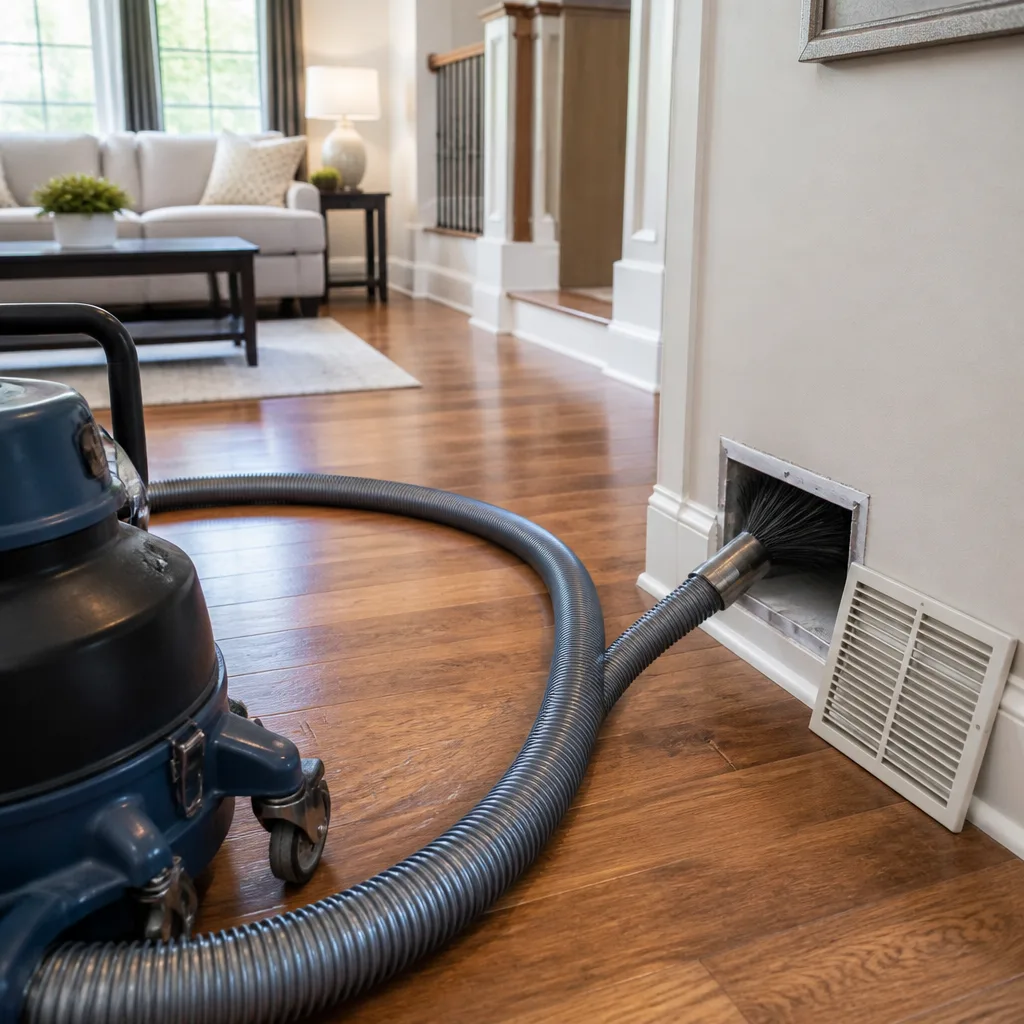 Whole-home duct cleaning
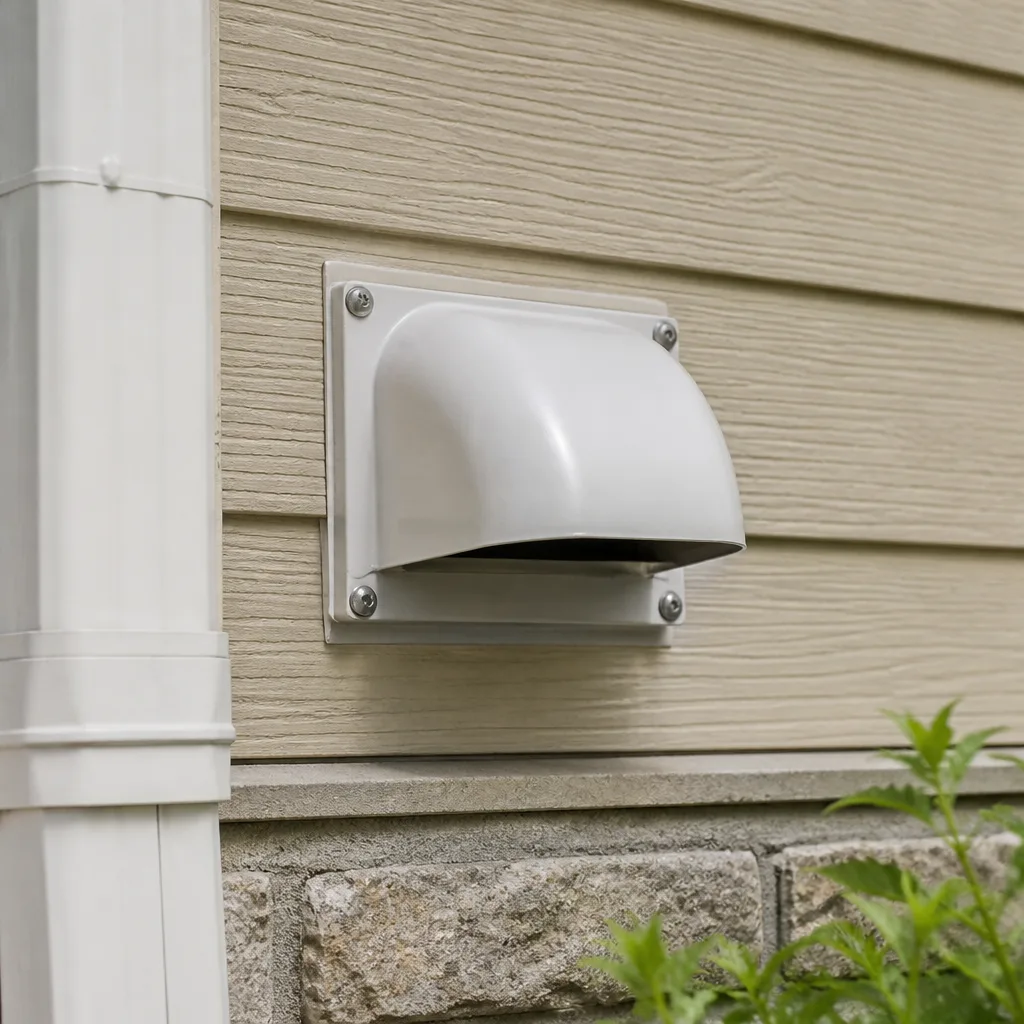 Dryer vent cleaning
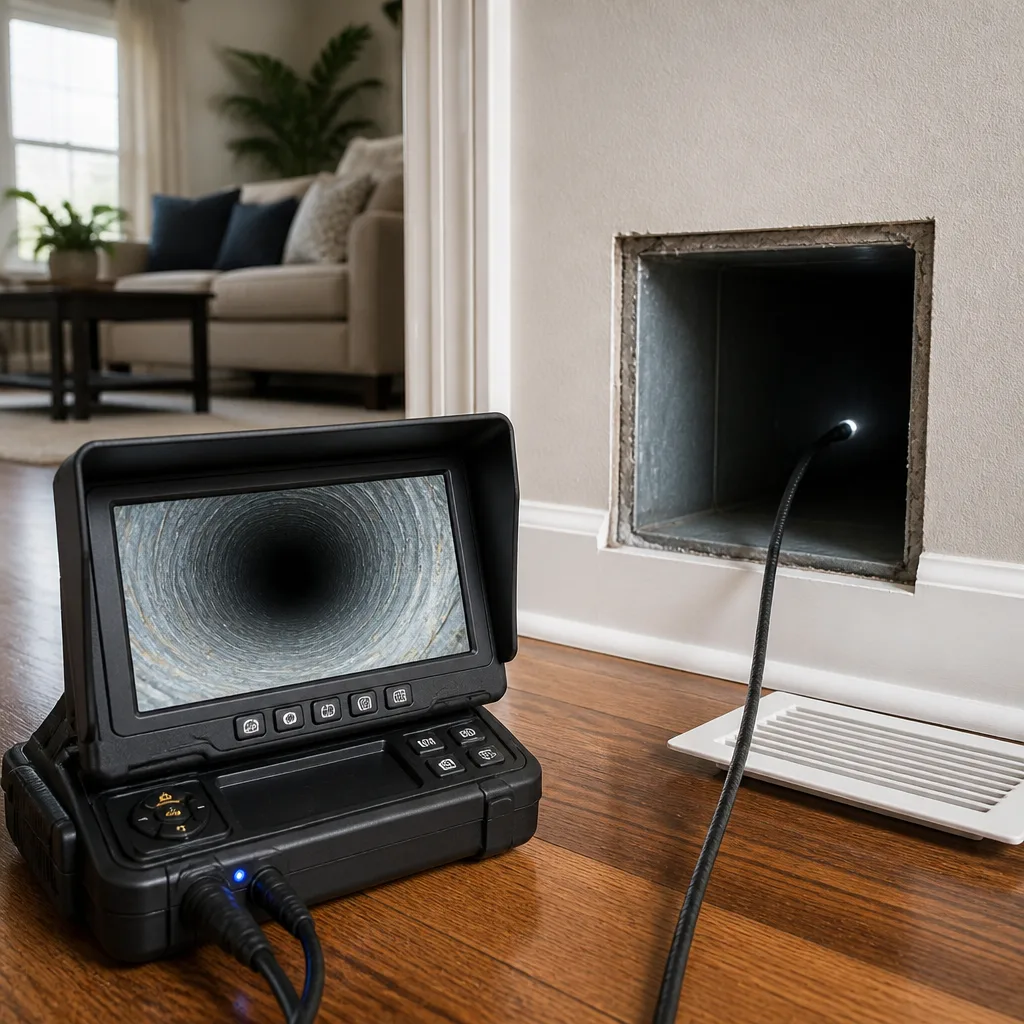 Camera inspection
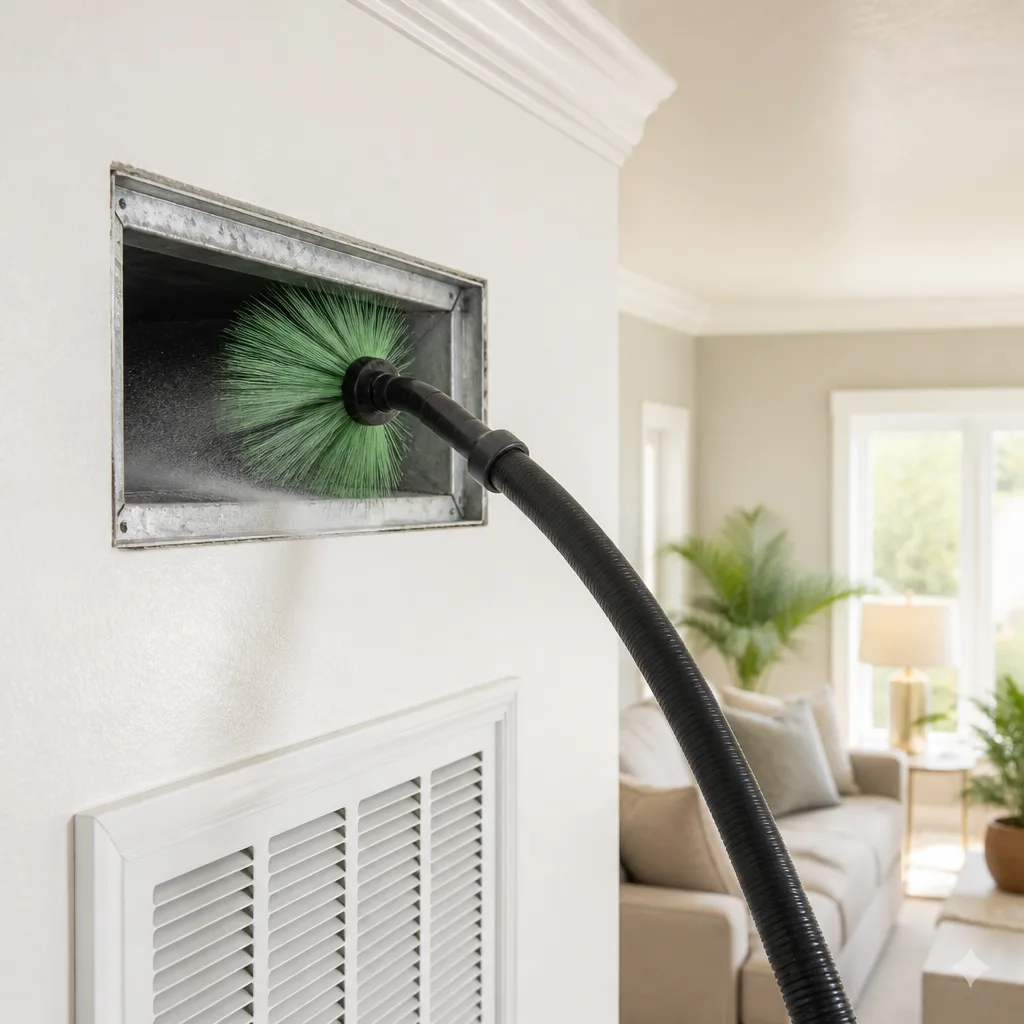 Sanitizing & deodorizing
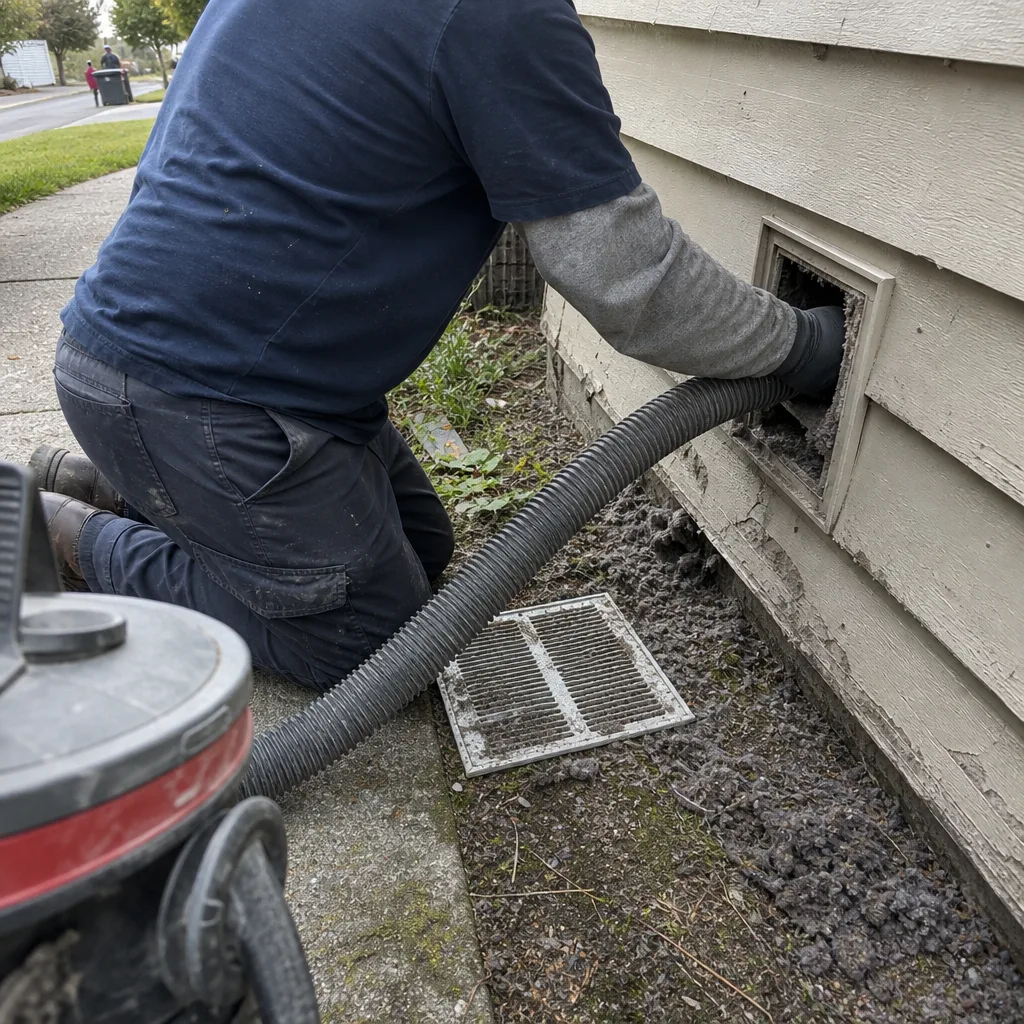
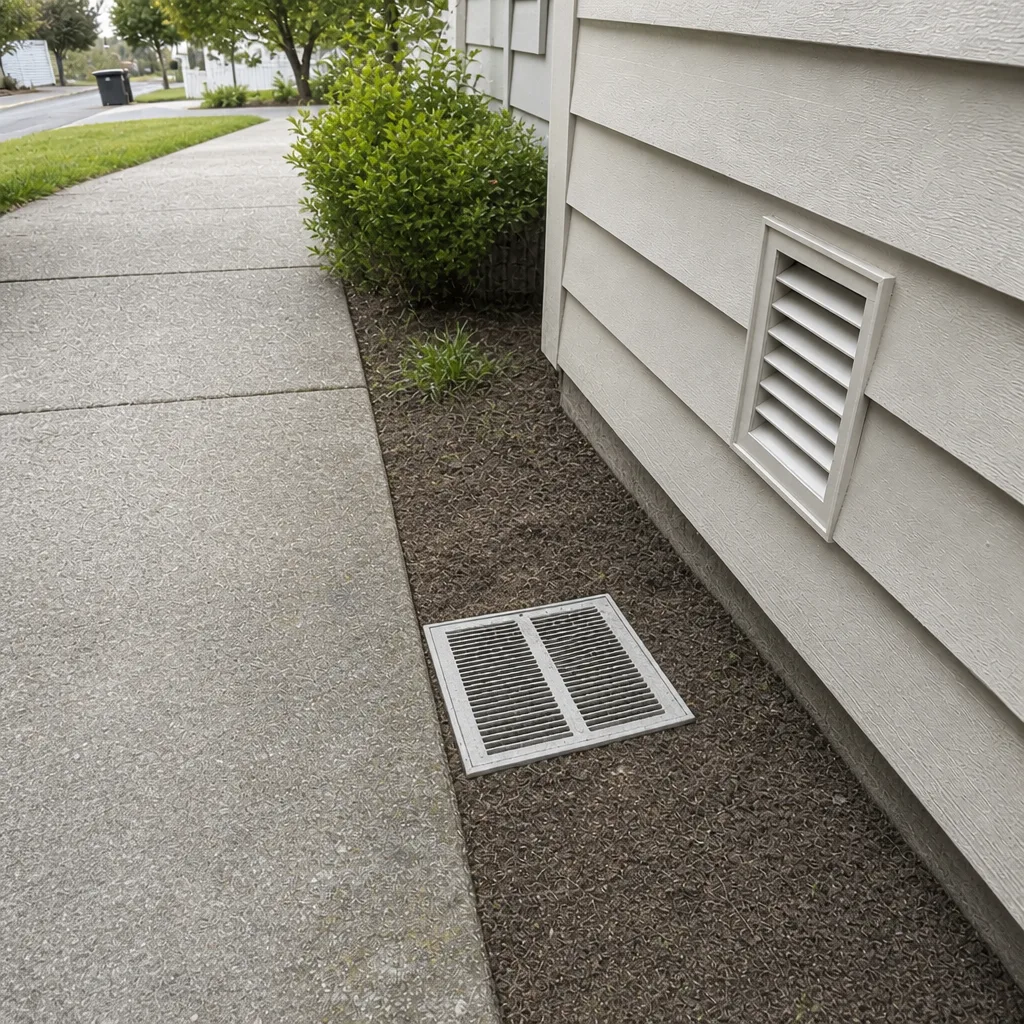
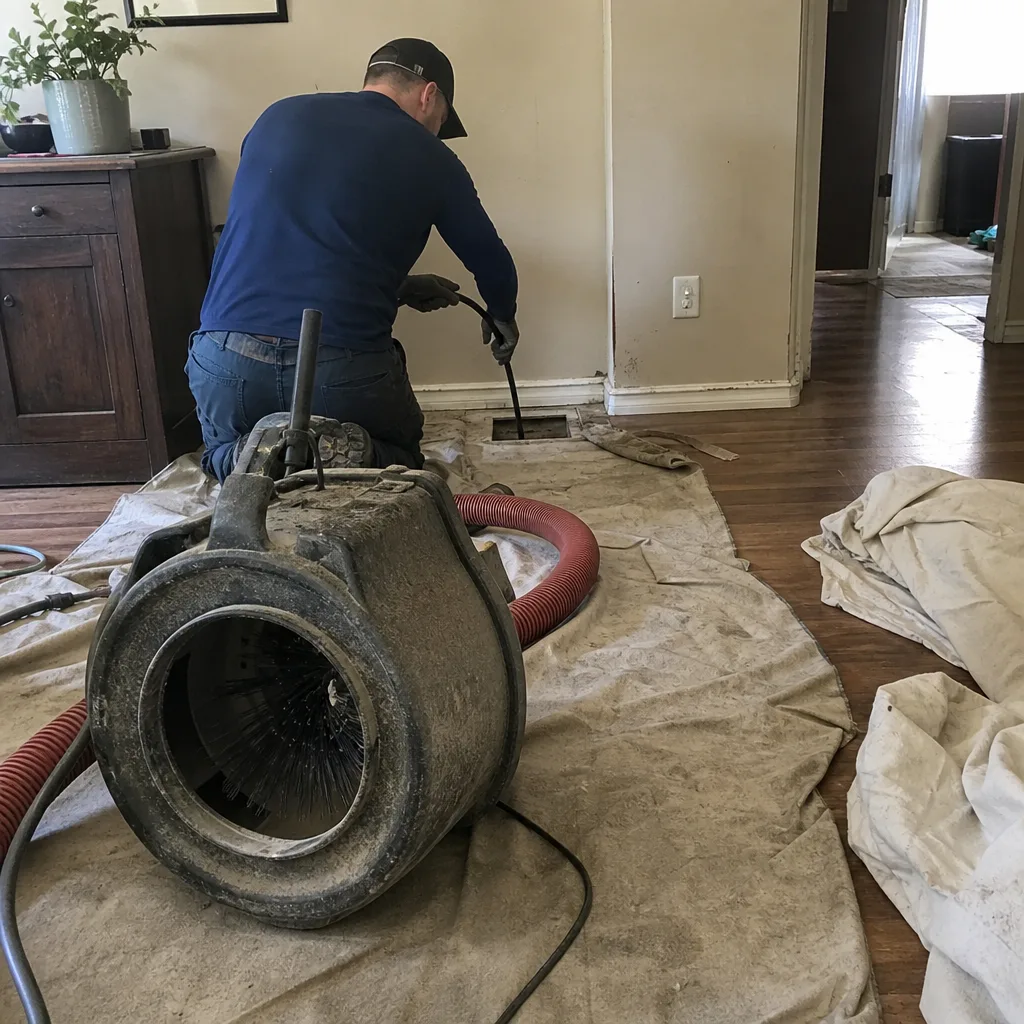
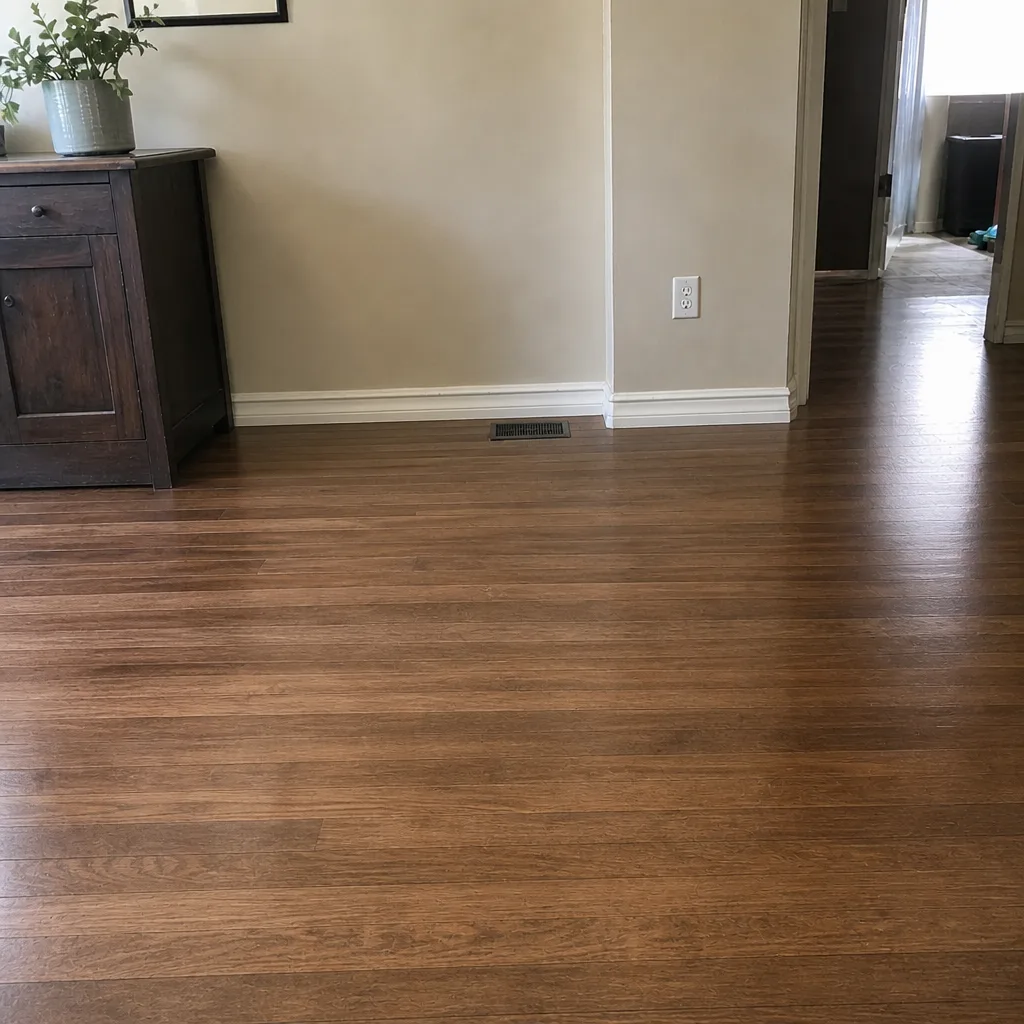
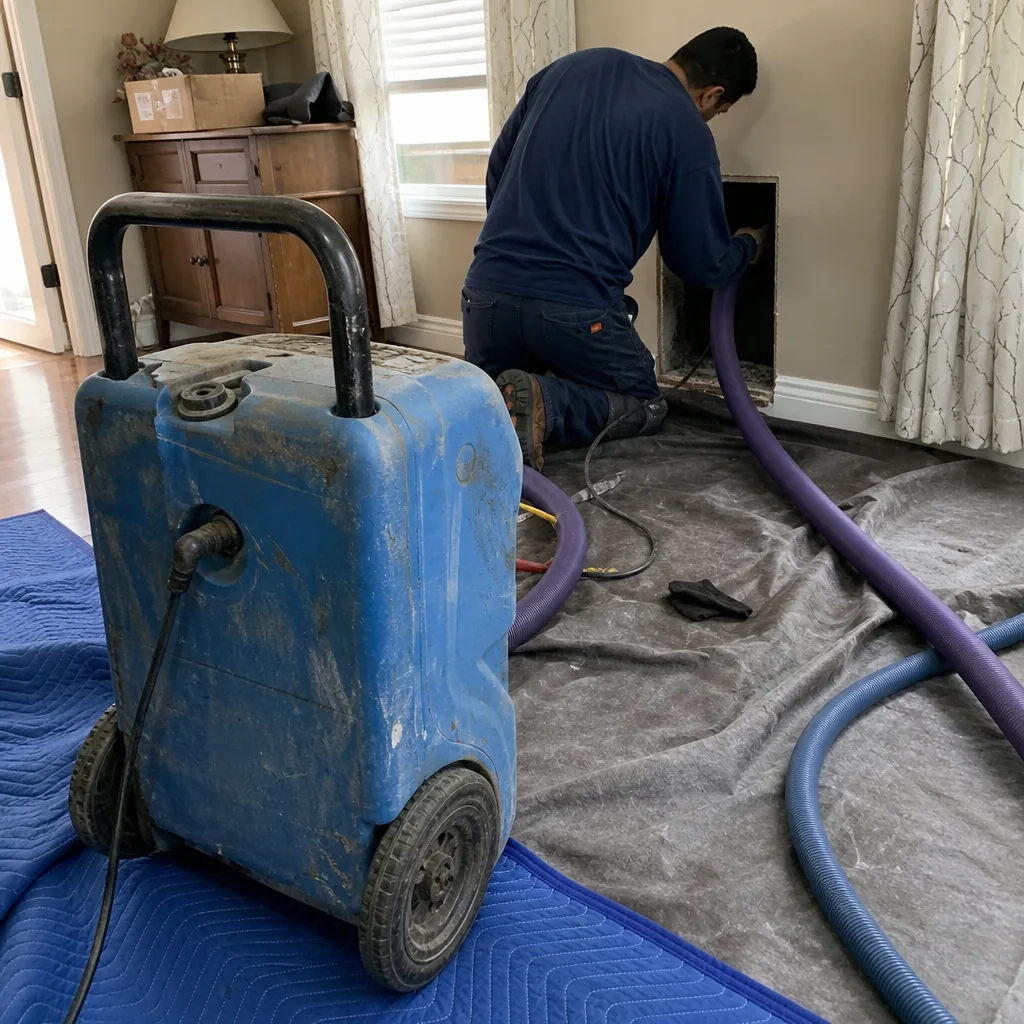
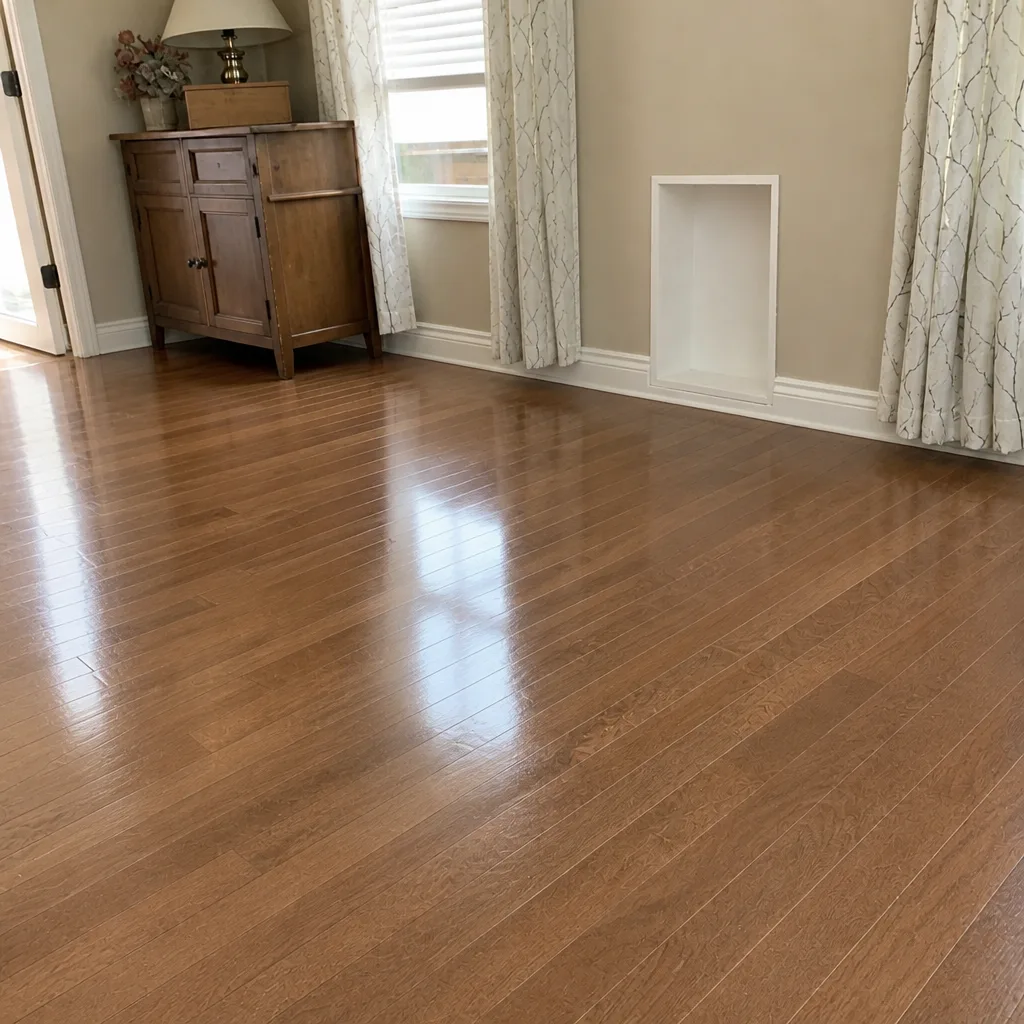
Whole-system duct and dryer vent check with before-and-after photos - you see exactly what came out of your vents
That "$99 whole-house special" is a bait ad - the real number appears once they are in your hallway, or the "clean" is a shop-vac at the register. We photograph the inside of your ducts before and after instead.
Seasonal Air Duct Cleaning Care for South Hill: Year-Round Homeowner’s Guide
Most homeowners treat duct cleaning as a once-every-few-years chore with no particular timing, then wonder why the air still smells off in October or the house feels stale every August. The timing matters more than the interval. South Hill sits on the plateau just east of the Cascades rain shadow but close enough to the mountains that late-summer wildfire smoke drifts in and settles over the neighborhood, and our winters carry enough damp to keep moisture moving through crawl spaces and wall cavities for months. Those two realities push and pull on the same duct system, and they don’t happen at the same time of year. This guide walks through the four pressure points South Hill homes actually face, what each one does to your ducts and HVAC, and how to build a service calendar that follows your system’s real stress rather than an arbitrary annual date.
Quick Answer
The most effective schedule for most South Hill homes is one contact cleaning of the full air pathway in late summer or early fall, timed before the furnace starts its first heating cycle, with a dryer vent cleaning on its own cycle and a filter and duct-integrity check each spring as pollen and mold spores peak. Duct cleaning done once and then left alone will not match what a four-season climate throws at a western Washington home. The work should track the seasons, not a calendar reminder.
Styles & brands we work with
- Whole-home duct cleaning
- Dryer vent cleaning
- Camera inspection
- Sanitizing & deodorizing
Table of Contents
- Why Duct Timing in South Hill Isn’t a Once-a-Year Decision
- Fall Furnace Startup: Why the First Heating Cycle Is the Most Important One
- Winter Moisture Dynamics in South Hill Homes
- Wildfire Smoke Season Protocol for South Hill
- Spring Allergen Loading: Pollen, Mold Spores, and What a Leaky Duct Does to Both
- Building a Seasonal Service Calendar for Your South Hill Home
- What a Proper Seasonal Inspection Covers
- The Dryer Vent Belongs on the Calendar Too
Why Duct Timing in South Hill Isn’t a Once-a-Year Decision
A duct system in a mild, damp, four-season climate takes four distinct kinds of stress across the year. Smoke season loads filters and pushes fine particulate into any gap in the system. Furnace startup burns off summer dust and carries it through the whole house in the first hour. Winter moisture condenses on poorly insulated flex duct runs and creeps up from crawl spaces. Spring dumps pollen and mold spores onto every exterior surface, and a compromised duct pulls them straight indoors.
Each of those is a different problem with a different fix. A single annual cleaning doesn’t map onto any of them well. What you want instead is a service rhythm that recognizes when the system is under the most load and gets ahead of it.
That’s a different way of thinking about duct care than most homeowners are used to. The common advice is “every three to five years” or “when you notice dust.” Neither is wrong, exactly, but neither accounts for the fact that a South Hill home in September faces a completely different air than the same home in March.
Here’s the frame: think of your duct system as a filter, a distribution network, and a moisture path all in one. Each of those three roles peaks at a different time of year, and the calendar should follow the peaks. We approach the full air pathway this way – ducts, HVAC cleaning, dryer vents, filtration, and sealing as one system rather than separate line items. A South Hill home with a disconnected flex run behind a knee wall, for example, will pull crawl-space air into the return all winter long regardless of how clean the visible portions of the ductwork are.
Fall Furnace Startup: Why the First Heating Cycle Is the Most Important One
The first time the furnace runs in the fall, it moves a full season’s worth of settled dust, pollen residue, and any material that dropped through return grilles over the summer. That first heating cycle is the single highest-load event of the year for the duct system, and the condition your ducts are in when it happens sets the air quality baseline for the whole heating season.
Before you flip the thermostat from cool to heat, here’s what’s worth checking and scheduling:
- Return grilles and registers. Lift the return grille over the filter slot and look at how much is settled inside the filter box. If the box itself is dusty, the ducts are probably carrying more than the filter is catching.
- Filter condition and rating. A clogged filter pulls against the blower and lets more bypass around the edges of the frame. Check the MERV rating against what your blower actually handles.
- Visible flex duct runs. In attics and crawl spaces, look for kinked, sagging, or disconnected runs. South Hill attics and crawl spaces both see this, especially in older construction and in additions that were ducted after the fact.
- Odor on startup. A faint dusty smell on the first run is normal. A musty or burning smell that doesn’t clear quickly is not, and it points to a system condition worth checking before the heat runs for weeks.
- Duct integrity above the register boots. The connection where sheet metal or flex meets the register boot is one of the most common leak points, and it’s invisible from inside the room.
Schedule the cleaning and any sealing before you turn the heat on for the season, not after. Once the furnace starts cycling, the air moving through the system carries whatever is in there across the entire house, and it will do so several times an hour for the next five or six months.
Winter Moisture Dynamics in South Hill Homes
Winter is when moisture matters most in a Pacific Northwest duct system, and it’s the season most homeowners understand least. South Hill winters run damp for months on end. That moisture doesn’t stay in the crawl space and attic. It migrates into the duct system, and where the ducts are cold, it condenses.
The specific mechanics matter here:
- Condensation on poorly insulated flex duct. Flex duct in a cold attic or vented crawl space that has lost insulation wrapping will hit dew point on the interior or exterior surface, and moisture collects on the foil or plastic jacket. That moisture is a food source for mold and a slow cause of jacket deterioration.
- Crawl space humidity transferring into the duct system. Supplies and returns run through the crawl space in most South Hill homes. If seals fail anywhere in the crawl, the system pulls humid crawl-space air into the return and distributes it across the living space. Foggy mornings are common here, and that humidity is exactly what a leaky duct wants.
- Return duct negative pressure. The return side of the system runs under negative pressure. That’s where a leak matters most, because air is being drawn in from wherever the leak is.
- Filtration wetting. A filter that’s seen moisture carries mold even when it looks intact. If a filter comes out damp or smells musty, it’s time to look downstream.
We use Nikro negative-air and HEPA-rated equipment to establish containment during cleaning. Winter jobs especially benefit from that: pulling debris out of a system that’s already struggling with moisture requires not spreading mold spores around the living space in the process. Where we find moisture damage or microbial growth, we assess and address the condition as part of the visit rather than leaving the homeowner with a cleaning bill and a problem that comes back in a month. If sealing issues are at the root of the moisture problem, we handle air duct cleaning and duct sealing in the same visit – the seals fix the leak, and the cleaning handles the debris and any microbial loading that leak created.
Wildfire Smoke Season Protocol for South Hill
Late summer is when South Hill homes face the sharpest air quality stress of the year. Wildfire smoke from the Cascades and points east drifts over the plateau and settles. The house closes up, the HVAC runs to keep things comfortable, and every leak in the duct system becomes a smoke infiltration point.
The window to prepare is July, before the smoke season really starts. By the time the sky turns orange, the work that matters is already done or already missed.
Here’s what the seasonal protocol looks like:
- Upgrade filtration before smoke season, not during it. Filter upgrades take effect over time. Change or upgrade to the highest MERV your blower is rated for in July, so the system is already running on the upgraded media when the first smoke event arrives.
- Assess duct system integrity in the same window. Every disconnected run, unsealed boot, and torn flex section is a path for smoke to enter. The system runs at a slight positive pressure in most homes, but returns run negative, and even a small return leak in a home under smoke load is a real path for fine particulate to enter.
- Know the smoke protocol. When smoke levels are elevated, keep the system running on the fan-only setting with recirculation (recirculate on a thermostat or system control, not fresh-air intake) with a good filter in place. That filters the indoor air repeatedly. Do not run an economizer or fresh-air intake setting during a smoke event.
- Seal compromised sections before the season, not during. A disconnected section found during a smoke event can’t be safely fixed mid-event because pulling the system apart while particulate is high risks introducing outdoor air into the return. Get the sealing done before smoke season.
- Interior wipe-down and post-season cleaning. After the smoke season, contact cleaning removes the fine particulate that’s accumulated in the ducts and on interior surfaces. That’s the reset before the furnace starts.
A home with compromised duct sealing and a basic filter running during a heavy smoke week can see indoor particulate levels push higher than outdoor levels because the system is recirculating air that carries the infiltration. That’s the case for treating smoke season as a duct-work season, not just a filter season. We carry Abatement Technologies equipment specifically because containment matters when the system itself is under smoke load, and pulling contaminated debris out without proper containment only moves the problem around.
Spring Allergen Loading: Pollen, Mold Spores, and What a Leaky Duct Does to Both
Spring in South Hill brings pollen from the trees and grasses that line the plateau, plus mold spore loading from every damp surface that’s still holding winter moisture. Both of those sit on exterior surfaces and drift through the air, and a compromised duct system amplifies them indoors.
The mechanism is straightforward. Your return system pulls air from inside the house back to the air handler. If the return has a leak in a wall cavity, an attic, or a crawl space, it pulls that air in – and the air in those spaces is carrying whatever is airborne outside. A sealed, clean return pulls from the living space. A leaky one pulls from wherever the closest opening is.
Spring is a good time for a filter and integrity check, even if no full cleaning is due. Here’s what we’d look at:
- Return duct sealing at the air handler connection and along any flex runs
- Filter condition and rating – and whether a higher-efficiency filter is appropriate for the system
- Condition of any filter grille in the living space (some South Hill homes have multiple returns with individual grille-mounted filters, and those all need checking)
- Moisture or microbial growth anywhere the winter condensate could have collected
- Register boots and supply runs – a spring check is often when we find a supply that got kicked loose during winter
If spring checks turn up mold or allergen loads, the right response is not “spray something and hope.” It’s cleaning the system under containment, correcting the moisture source or leak that allowed the growth in the first place, and then applying a documented post-cleaning surface treatment. We use Guardsman-brand protection products as part of that process so the surface treatment is a documented step, not an aerosol sprayed over the top of an uncleaned system.
Building a Seasonal Service Calendar for Your South Hill Home
Here’s the practical version of all of the above: a service rhythm that follows the pressure points in the right order.
- Spring (March to May). Filter and duct-integrity check. Catch leaks and moisture issues before allergen season peaks. If a full cleaning is due, this window works – it catches the post-winter state and sets up the season. If cleaning was done in the fall, this can be as light as a filter change plus a visual walk-through of accessible duct runs.
- Early summer (June to early July). Smoke-season prep. Upgrade filtration to the highest the blower is rated for. Complete any duct sealing. Get system integrity assessed while there’s still time to correct what a check turns up.
- Late summer to early fall (late August to early October). Full contact cleaning of ducts, HVAC components, and air pathway. This is the primary annual cleaning window for most South Hill homes – the system gets reset before the heating season begins.
- First cold snap (whenever heat first goes on). Watch startup behavior. Odd smells, odd sounds, uneven heat. This tells you whether the fall cleaning caught everything.
- Winter (November to February). Watch for moisture signs. Condensation on visible duct runs in crawl and attic. Musty smells. Damp filters. Outdoor humidity is high and indoor heating is running, and any moisture path in the system is under load.
- Dryer vent (independent cycle). This one’s separate from the duct calendar. It should be cleaned based on household load (how many loads of laundry per week), not once a year by default. A household doing a load a day needs more frequent cleaning than a household doing a few loads a week.
That’s the rhythm. It works because each step is aligned with the season that stresses the system, not with a generic interval. It’s also configurable per household – if a South Hill home has pets, recent renovation, or a known moisture issue, the calendar tightens. A rental property needs its own variant to match tenant changes and turnover.
What a Proper Seasonal Inspection Covers
An inspection is only useful if it’s thorough. Here’s what we’d put on the checklist for a properly scoped seasonal inspection of a South Hill duct system:
- Accessible duct runs in attic, crawl, and mechanical spaces – condition, alignment, insulation integrity, and sealing at every joint
- Air handler and blower compartment – filter fit, filter condition, blower cleanliness, coil condition where accessible
- Return system – filter grille condition, return duct integrity, and whether the return pulls from the living space or from a cavity
- Supply boots – secured at floor and wall, sealed where flex meets boot
- Register and grille mounting – physical security and interior cleanliness
- Moisture indicators – any visible condensation, water staining, or microbial growth in the duct system or adjacent spaces
- Filtration system – whether a Honeywell or Aprilaire filtration unit is in place, whether the media is loaded properly, and whether the media is the right MERV for the blower
- Dryer vent – separate inspection of the exhaust path, exterior termination, and any lint accumulation
We work the inspection as a diagnostic step, not a sales opportunity. If the system is in good shape and a cleaning isn’t warranted, we say so. If we find something, we explain what we found and what it means.
The Dryer Vent Belongs on the Calendar Too
The dryer vent is part of the air pathway out of your home, and it’s the single most commonly neglected node in that pathway. It’s also a fire risk when it’s loaded with lint – the vent is a direct path from the dryer to the exterior, and a clogged vent is a heat trap with lint as fuel.
Dryer vent cleaning is a standalone service for a good reason. Its cleaning interval tracks household laundry load, vent length, and the number of elbows in the run, not the same seasonal cycle as the ductwork. A short, straight vent to the exterior may need cleaning far less often than a long, multi-elbow run where lint pockets in the bends. A vent that exits through the roof needs more attention than one that exits through a side wall, in part because roof vents are harder to inspect and the lint drop-off pattern is harder to see visually.
We handle dryer vent cleaning as its own service because it’s often what HVAC-only providers skip – they’re set up for duct cleaning and treat the dryer as outside their scope. Putting it on the seasonal calendar as a separate, standalone cycle matters.
Common Mistakes to Avoid
- Cleaning ducts but never sealing them. Cleaning a leaky duct system is a reset that goes stale within weeks because the leaks that let debris in are still there. Cleaning and sealing belong in the same visit, and we handle both in-house rather than referring the sealing to a separate contractor.
- Timing the annual cleaning to spring instead of fall. Spring cleaning feels intuitive (spring cleaning, right?), but it misses the fall furnace-load event, which is when a clean system matters most. Spring is for the pre-allergen check, not the primary cleaning.
- Upgrading filters mid-smoke-season. Filter upgrades work over time. If you wait until smoke is already in the air, you’ve missed the window. Do the upgrade in July.
- Skipping the return side. Supply registers are visible and easy to focus on. The return is where the system draws air in, and a leak there pulls crawl-space or cavity air into the living space continuously. Return integrity matters more, not less.
- Assuming “duct cleaning” covers the dryer vent. Those are separate systems with separate cleaning intervals. A full-system provider handles both, and a provider that only offers duct cleaning leaves the dryer vent out.
- Running the HVAC with a wet or musty filter. A damp filter doesn’t just filter worse, it becomes a microbial source. If a filter comes out wet, look for the moisture source upstream before running the system.
- Using consumer-grade attachments on a full system. A vacuum with a shop-vac-style hose cannot agitate debris loose from duct walls or establish containment. Contact cleaning needs rotary agitation and HEPA-rated negative-air equipment. That’s why we use Rotobrush contact-cleaning equipment and Nikro negative-air machines – the same grade used in commercial and remediation work.
See the difference
 Before
 After
 Before
 After
 Before
 After
When to Call a Professional
Some conditions don’t wait for the seasonal calendar. Call a professional when you smell something musty or chemical coming from a register that wasn’t there before, when you see visible debris coming from a supply boot, when a filter comes out wet, or when someone in the home has new respiratory issues that track to a specific part of the house. Visible mold anywhere in the duct system or on a diffuser is a stop-and-call condition. So is odor on startup that doesn’t clear after the first run of the season. If a duct run has visibly come loose or torn in a crawl space or attic, don’t run the system until it’s assessed – the return side will pull from that leak continuously.
South Hill Air Duct Cleaning offers free estimates in South Hill. Call (855) 510-1735. We answer 24/7. Fast dispatch from 7am to 7pm, Sunday through Friday.
Frequently Asked Questions
Once every two to three years for most South Hill homes, with the primary cleaning timed in late summer or early fall before the first heating cycle, plus a spring filter and integrity check. Homes with pets, recent renovations, or known moisture issues need cleaning on a shorter cycle, closer to once a year. Call (855) 510-1735 for an exact quote – estimates are free.
Because the first heating cycle of the season is the highest-load event of the year for the duct system. Cleaning before the furnace runs means the air that gets distributed across the house for the next five to six months starts from a clean baseline. Spring cleaning misses that window entirely. Call (855) 510-1735 to book a fall cleaning slot – estimates are free.
Often, yes – or a duct problem that’s revealing a moisture source. Winter is when condensation on poorly insulated flex duct and crawl-space humidity migrate into the duct system. If a return has a leak in the crawl, it pulls humid air continuously. A professional inspection can identify whether the source is the duct system itself or a moisture issue upstream.
Ask for before-and-after documentation of the system conditions. We photograph the duct interior before cleaning and after, so you can see what changed. Ask for that from any provider you’re considering – the answer tells you a lot about their process. Call (855) 510-1735 for a free estimate.
You might. Dust in the living space is only one indicator and usually a late one. Return duct leaks that pull from a crawl space or attic don’t show up as dust in the house – they show up as musty smells, elevated allergen response, or higher energy usage. A seasonal inspection is the way to know. Call (855) 510-1735 for a free estimate.
Standard duct cleaning uses consumer-grade attachments that can’t agitate debris loose from duct walls or contain what comes out. We use Rotobrush rotary contact cleaning that physically agitates debris while Nikro HEPA-rated negative-air equipment captures it, so contaminants leave the home. That level of containment is the same grade used in commercial remediation work.
The Bottom Line
South Hill’s climate pushes four distinct pressures onto the same duct system across the year: smoke in late summer, furnace startup in fall, moisture in winter, and allergens in spring. Each one calls for a different response, and a single annual cleaning that ignores the timing doesn’t meet any of them well. Build a calendar that follows the pressure points – spring integrity check, July filtration upgrade, late summer to early fall full contact cleaning, winter moisture watch, standalone dryer vent cycle. Handle sealing in the same visit as cleaning whenever possible. And when a system is compromised, act on the inspection rather than the calendar. For a system-wide review of what your ducts are dealing with, we’d be glad to walk through it with you.
Call (855) 510-1735 for a free estimate. We answer 24/7. Fast dispatch from 7am to 7pm, Sunday through Friday. If you’re looking for the full picture of how the seasonal guide fits into our overall work, start with South Hill Air Duct Cleaning and we’ll route you to the right service.
Written by the team at South Hill Air Duct Cleaning.