
Last updated November 25, 2026
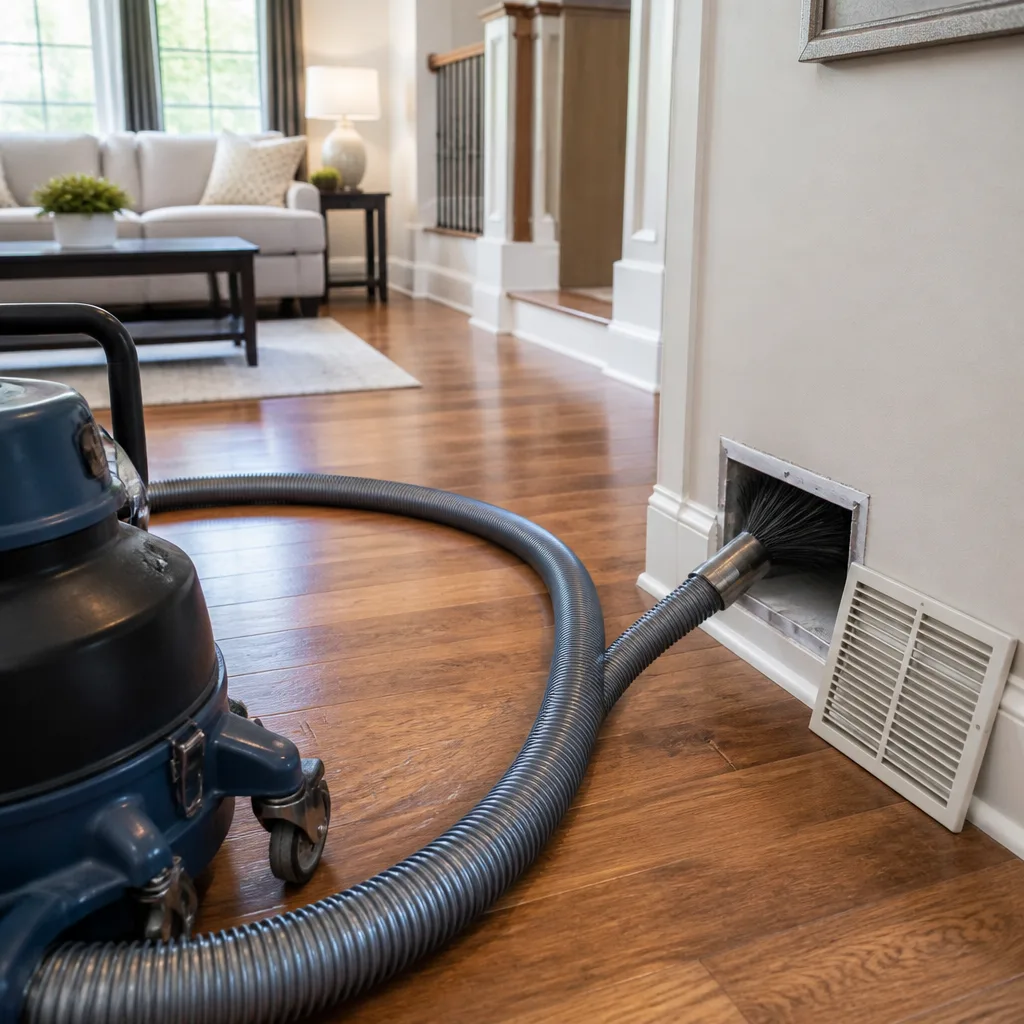 Whole-home duct cleaning
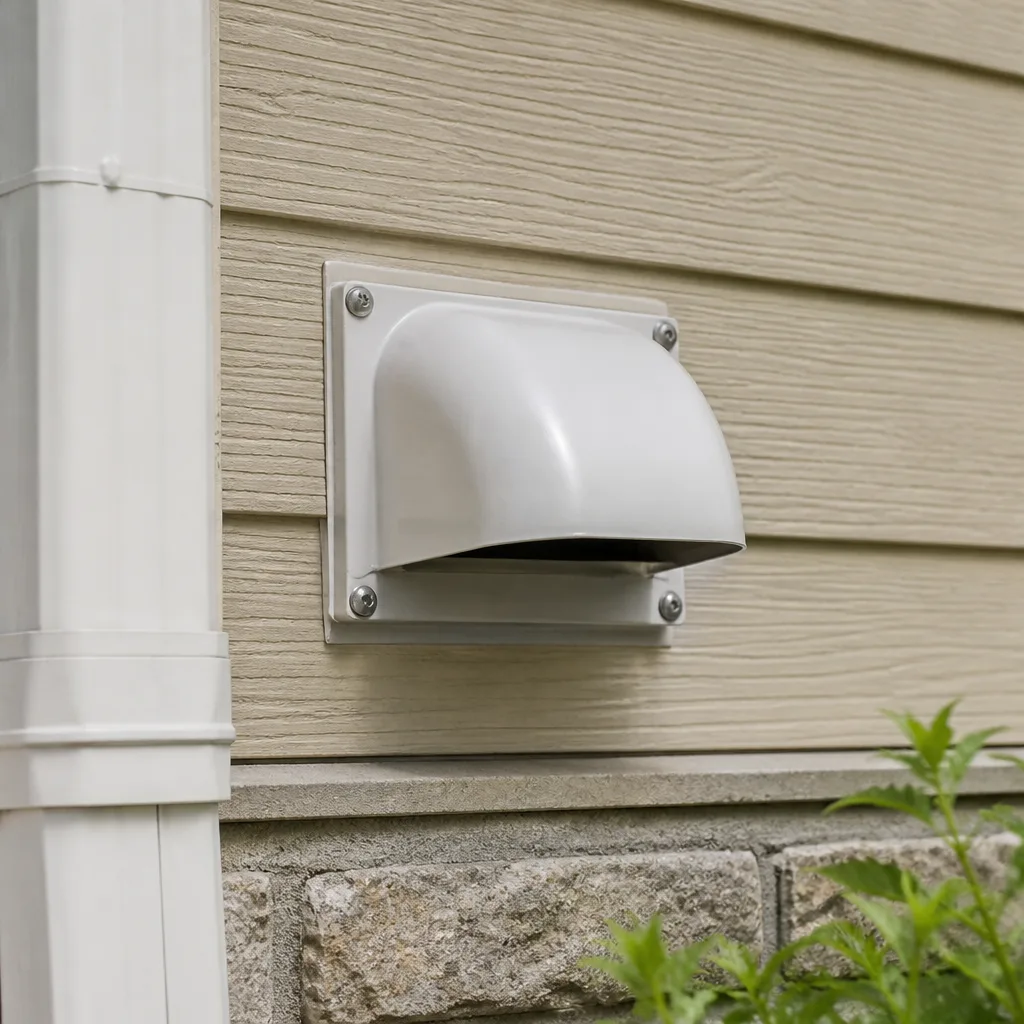 Dryer vent cleaning
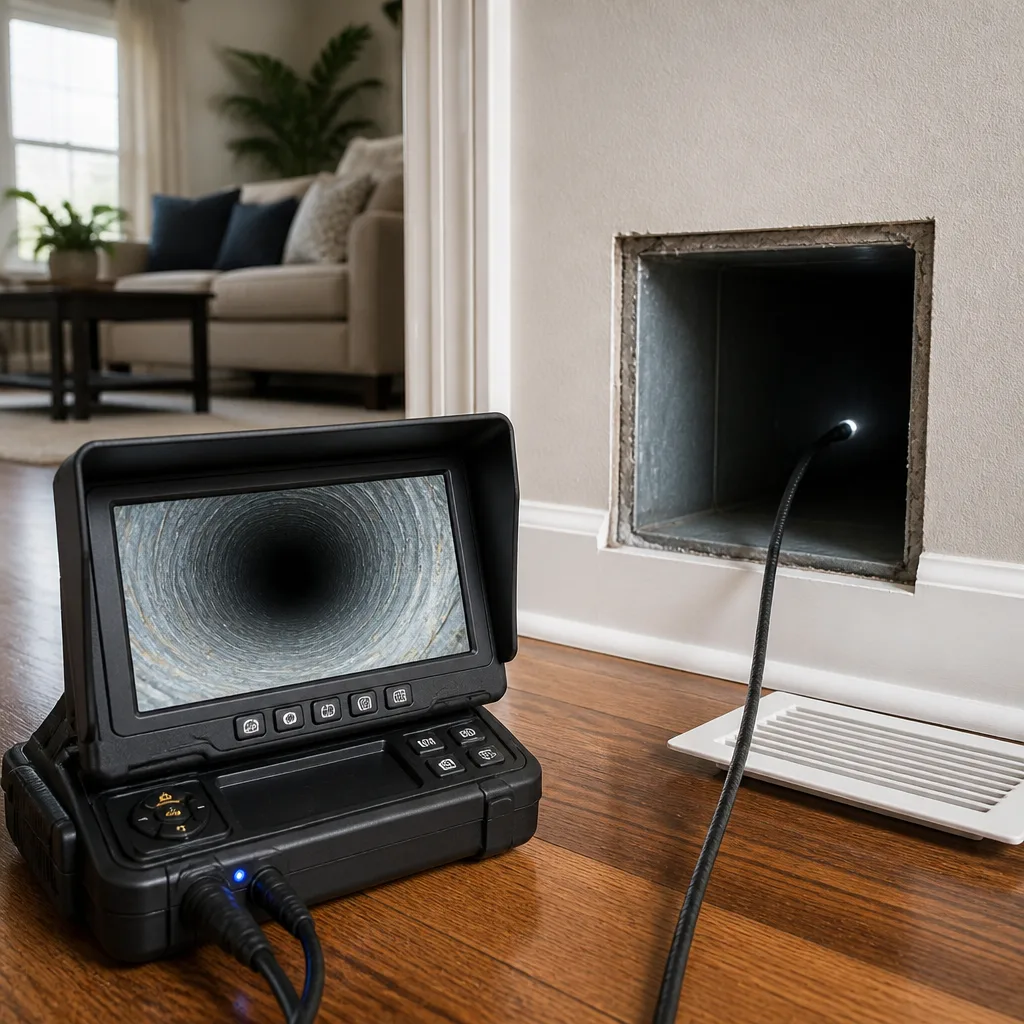 Camera inspection
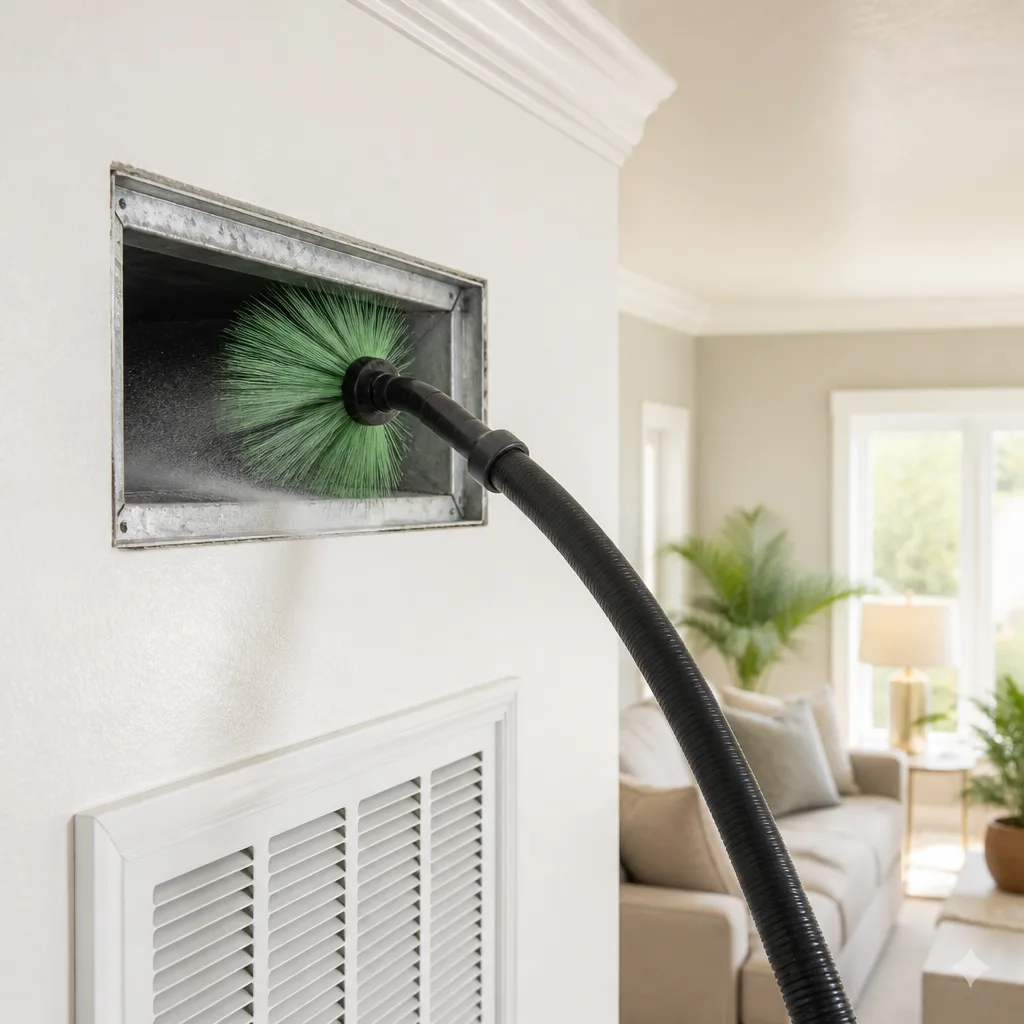 Sanitizing & deodorizing
Whole-system duct and dryer vent check with before-and-after photos - you see exactly what came out of your vents
That "$99 whole-house special" is a bait ad - the real number appears once they are in your hallway, or the "clean" is a shop-vac at the register. We photograph the inside of your ducts before and after instead.
How to Hire an Air Duct Cleaning Contractor in South Hill: A Step-by-Step Guide
Washington State does not require a specific license to clean air ducts. Anyone with a shop vac and a website can legally take the job. That’s not an argument against hiring locally; it’s an argument for knowing exactly what questions to ask before you let anyone near your HVAC system. This guide walks South Hill homeowners, landlords, and property managers through the vetting process we’d want our own families to follow: the questions that reveal whether a contractor thinks about air pressure and access points or just wants to sell you a per-vent coupon, how to read certifications versus logos, and what a legitimate scope document looks like before a single tool comes out of the van.
Quick Answer
Hiring an air duct cleaning contractor in South Hill means verifying three things before you book: that the company uses negative-air equipment with HEPA filtration (not just a vacuum attachment), that it can name its access-point strategy for your specific duct type, and that it will give you a written scope of work with a flat price per system rather than a per-vent teaser. Ask five specific questions, compare the answers instead of the prices, and you’ll filter out most low-effort operators before they get access to your home.
Styles & brands we work with
- Whole-home duct cleaning
- Dryer vent cleaning
- Camera inspection
- Sanitizing & deodorizing
Table of Contents
- Why Duct Cleaning Has Almost No Licensing Barrier in Washington
- The Five Questions That Separate Real Contractors From Price Shoppers
- What NADCA Membership Signals (And What It Doesn’t Guarantee)
- How to Verify Equipment for South Hill’s Duct Types
- Red Flags in Quotes: Per-Vent Pricing and Vague Scope
- What a Legitimate Scope Document Should Include
- A Step-by-Step Verification Checklist Before You Hire
- What to Expect After the Job and How to Confirm the Work Was Done
Why Duct Cleaning Has Almost No Licensing Barrier in Washington
In Washington State, there’s no dedicated air duct cleaning license. General contractor registration covers construction work, and electrical or plumbing licenses cover their own trades, but the specific act of cleaning, sanitizing, and repairing residential ductwork sits in a gap where almost anyone can hang up a shingle. That’s worth repeating, because it changes how you should approach hiring.
In a licensed trade, the license does part of the filtering for you. In duct cleaning, the filtering is entirely on the consumer. A company with a professional website, a well-designed van wrap, and a professional-sounding phone greeting may be running consumer-grade shop vacs with brushes taped to the hose. A smaller, quieter operation might own the exact equipment used in commercial remediation work.
What this means for South Hill homeowners: the hire is a research task, not a shopping task. The good news is that the research is fast if you know what to look for. Five questions, one licensed pro’s registration lookup, and one written scope document will tell you more than a wall of five-star reviews.
We built our own business around this gap. Our technicians have up to 14 years of experience, and we’ve watched the difference between a company that owns the right equipment and one that rents it for the day come down to the questions the homeowner asked before booking. If your home or rental property needs professional work and you’d rather start with someone who can answer these questions up front, you can always call us at (855) 510-1735. We answer 24/7. Fast dispatch from 7am to 7pm, Sunday through Friday.
The Five Questions That Separate Real Contractors From Price Shoppers
Ask these exact questions when you call. Write down the answers. The answers, not the price, tell you what kind of company you’re dealing with.
- “What negative pressure equipment do you use?” A process-literate contractor will name the equipment. You’re listening for negative-air machines with HEPA filtration – the kind that keep contaminants inside the vacuum instead of pushing them back into your ceiling. If the answer is “a really powerful vacuum,” push on it. Push hard.
- “Where do you cut access points, and how do you seal them afterward?” Every duct system needs access openings to clean properly. A real pro will describe where those cuts go (at trunk lines, near plenum transitions, sometimes at the start of long branch runs) and how they close the cut when finished. If they don’t cut access, they can’t clean past the first few feet.
- “Do you do contact cleaning, or source removal?” Contact cleaning means brushes or rotary tools physically agitate debris loose while the vacuum captures it. Source removal means the debris is taken out of the system instead of just loosened. You want both answers to be yes.
- “What’s the price per system?” Not per vent. Not “starting at.” A flat price for the whole system, agreed before work begins. If the answer is per-vent, you’re being set up for a bigger invoice once the technician is inside.
- “Will you give me a written scope before you start?” The answer must be yes. Verbal assurances aren’t sufficient. You want the scope in writing so that “clean the ducts” can’t quietly become “clean the ducts near the registers and call it done.”
A contractor who answers all five clearly is a candidate. A contractor who gets defensive, redirects to “our reviews,” or says “we do the standard job” is telling you something. Listen to it.
What NADCA Membership Signals (And What It Doesn’t Guarantee)
NADCA, the National Air Duct Cleaners Association, publishes a widely cited standard for how HVAC system cleaning should be done. It covers assessment, source removal, containment, and verification. A company that follows that standard is following a methodology you can judge it against.
Membership in NADCA is a useful signal. It suggests the company has chosen to align with the industry’s published standards and is willing to be held to them. It also implies some baseline of training, because membership comes with access to training resources and continuing education.
What NADCA membership does not guarantee:
- That the specific crew arriving at your house has completed the training.
- That the company owns the equipment described in the standard.
- That every job is scoped and priced the way the standard recommends.
- That the company won’t use pressure tactics to upsell add-ons you didn’t ask for.
So how do you read it correctly? Treat the logo as a starting point, not a destination. Ask a follow-up: “Who on your crew has NADCA training, and will that person be on my job?” The answer tells you whether the membership is real cultural alignment or a logo on a website. And if you want a related read on what professional-grade equipment looks like in practice, our own team’s air duct cleaning page lays out the equipment and process we use.
How to Verify Equipment for South Hill’s Duct Types
South Hill has a mix of housing stock that matters for duct cleaning. The newer subdivisions and rental complexes west of the hill are dominated by flex duct, which runs in long insulated runs and compresses easily when cleaning tools run through it. Older neighborhoods closer to the established town core have more galvanized trunk lines with rigid branch runs, some of them decades old with taped-and-mummified joints.
These two duct types need different equipment and different care:
- Flex duct needs rotary contact tools that agitate debris without tearing the inner liner. Aggressive brushing tears flex duct in a way that leaks air into wall cavities afterward.
- Galvanized trunk lines need stiffer rotary tools and, often, more access points because the trunk is longer and the branch runs are shorter. Loose joints and disconnected sections are more common here and should be identified during cleaning, not left for you to discover six months later.
When you call a contractor, tell them what your ducts are made of (or ask them to inspect). A real pro will adjust the plan based on duct type. A price-shopper will quote you the same number regardless. In our experience, the equipment that handles both well comes from brands like Rotobrush and Nikro, whose rotary contact cleaning and negative-air HEPA machines are standard in commercial remediation work. Abatement Technologies equipment shows up in the same category, because it’s built for contamination containment.
An important corollary: your HVAC system’s air handler, evaporator coil, and condensate pan are part of the system. If you’re also due for that side of the work, our HVAC cleaning covers what proper component cleaning looks like in a South Hill home. If your dryer vent hasn’t been serviced, the vent itself is a separate fire-safety concern that most HVAC-only providers skip. Our dryer vent cleaning is offered as a standalone service for exactly that reason.
Red Flags in Quotes: Per-Vent Pricing and Vague Scope
The duct cleaning quote is where the industry’s bait-and-switch reputation lives. Here’s how to spot it before you book.
Red flag: per-vent pricing
“$45 per vent” sounds transparent and turns out to be the opposite. Your count of vents and the contractor’s count of vents rarely match. And a per-vent price rewards speed over thoroughness, because the faster the tech moves through registers, the more jobs fit in the day. A legitimate contractor prices the whole system as a single scope with a single number.
Red flag: “starting at” or teaser coupon pricing
A “$99 whole house special” in the ad becomes a much larger invoice once the technician is on site and “discovers” that you need additional work. Ask for the price per system in writing before you book. If the ad number and the quote number don’t match, walk.
Red flag: vague scope language
“We’ll clean your ducts” is not a scope. A scope says what will be cleaned (trunk lines, branch runs, plenum, air handler), what will be sanitized, what will be inspected for leaks, and what will be reported afterward.
Red flag: high-pressure add-on upsells
Legitimate add-on services exist. Duct sanitizing is real. Filtration upgrades are real. But they should be recommended after inspection, based on what the tech finds, and priced separately as optional. A tech who shows up and immediately pushes three upgrades before opening an access panel isn’t diagnosing; they’re selling.
Red flag: no before-and-after documentation
You should see what changed. Ask for before-and-after photos of your own ducts, taken during your own job. If a contractor can’t produce them, you can’t confirm the work was done.
If a quote contains three or more of these warning signs, you don’t need to negotiate. You need to walk. And if you’re still not sure what to expect on the price side, we’ve written more about how a real flat price per system works on our main page for South Hill Air Duct Cleaning.
What a Legitimate Scope Document Should Include
A scope document is the contract between your house and the contractor’s equipment. It protects both of you, and it’s the single best thing you can ask for when comparing bids. A complete scope includes:
- Full address and system description – square footage, number of HVAC systems, approximate number of registers, and the duct material(s) in the home.
- Cleaning methodology – contact cleaning (brush and rotary tools) plus negative pressure (HEPA vacuum) with named equipment.
- Access point plan – where cuts will go, how many, and how they’ll be sealed afterward.
- Component coverage – trunk lines, branch runs, plenum, air handler cabinet interior (as accessible), registers and grilles removed and cleaned.
- Repairs and sealing – whether the scope includes identifying and sealing disconnected joints and tears, or whether that’s a separate visit. (We do repair and seal in-house on the same visit at South Hill Air Duct Cleaning, because a duct cleaner who refers that work out is leaving an open loop.)
- Sanitizing or surface treatment – whether it’s included and with what product.
- Verification – what documentation the contractor provides at the end of the job. Before-and-after photos, a written summary of conditions found, and repair notes.
- Total price – per system, in writing, agreed before work begins.
If a contractor can’t or won’t put all eight of those into a document before the job, the scope is verbal and the price is soft. That’s a bad combination.
A Step-by-Step Verification Checklist Before You Hire
Here’s the process in the order we recommend. It takes about an hour of research and phone time and saves a year of regret.
- Check the registration. Look up the contractor on the Washington State Department of Labor & Industries site. You’re looking for general contractor registration that’s currently active – not expired, not suspended.
- Ask the five questions from the section above and note the answers.
- Request the scope in writing. Email is fine. Ask for it before you schedule.
- Compare quotes on scope, not price. Two quotes that differ by $200 but differ by three scope line items are not comparable.
- Confirm the equipment. Ask which brands are on the truck and how the negative-air machine is set up. Rotobrush and Nikro are named because they’re industry-standard, but the real question is whether the tech can describe how the equipment works.
- Ask about repairs. “If you find a disconnected joint while cleaning, what happens?” If the answer is “we’ll refer you to someone,” you’ll be coordinating two contractors on one problem.
- Check the insurance. Ask for a certificate of insurance for the company doing the work. Legitimate contractors will provide this without hesitation.
- Confirm the price per system in writing, and confirm what happens if unexpected conditions are found – what’s the process for approving additional work, and who approves it.
This checklist works for any service in the South Hill area, and it works whether you’re hiring a full-system specialist or someone with a narrower focus. Use it as written, and the answers will sort themselves.
What to Expect After the Job and How to Confirm the Work Was Done
The job isn’t done when the tech pulls out of the driveway. It’s done when you have documentation showing what was found, what was cleaned, and what conditions changed.
Here’s what a legitimate post-job wrap-up looks like:
- Before-and-after photos of your own ducts taken at the plenum and at representative branch runs.
- A written summary of conditions found: debris levels, moisture indications, pest evidence, suspected leaks, disconnected sections.
- Any repairs and sealing performed – sealed joints, reconnected sections, patched access cuts.
- Post-cleaning surface treatment documentation if sanitizing was part of the scope.
- Recommendations for filtration or future service, based on what the tech actually observed.
A softer indicator also matters: how the air in the first floor of the house behaves in the first week. If there was a musty odor, it should be reduced. If airflow into a bedroom felt weak, it should feel more even. Subtle changes, not dramatic ones – but changes.
The strongest confirmation is that the contractor can tell you what they found without prompting. If the technician who arrives can explain every finding and show you the documentation, that’s the process-literate contractor this whole guide has been steering you toward.
Common Mistakes to Avoid
- Hiring on price alone. A per-vent price in the ad and a whole-system price on the invoice are two different numbers. Ask for the whole-system number in writing before you book, every time.
- Skipping the scope document. Verbal assurances feel good and provide no leverage. If it isn’t in a scope, it isn’t in the job.
- Assuming duct cleaners repair ducts. Most refer that work out. Confirm in advance whether a disconnected joint or torn flex run will be handled in the same visit or shipped to a second contractor.
- Forgetting the dryer vent. The dryer vent is a separate component of the home’s air pathway and a leading cause of residential fires. Many HVAC-focused providers don’t service it. If yours won’t, that’s a gap in the scope, not a minor omission.
- Not matching equipment to duct type. Aggressive brushing tears flex duct. Soft shop-vac cleaning misses galvanized trunk debris. Ask how the company adjusts its approach to what’s in your home.
- Ignoring the air handler. The HVAC cabinet, blower, and evaporator coil area are part of the system. Clearing the ducts but leaving the cabinet uncleaned recontaminates the ducts.
- Underestimating how often it really needs doing. Every few years for most homes, more often after renovations, pest activity, or water intrusion. Ask a contractor to tell you what they’d recommend for your home, then sanity-check that answer against your own history.
See the difference
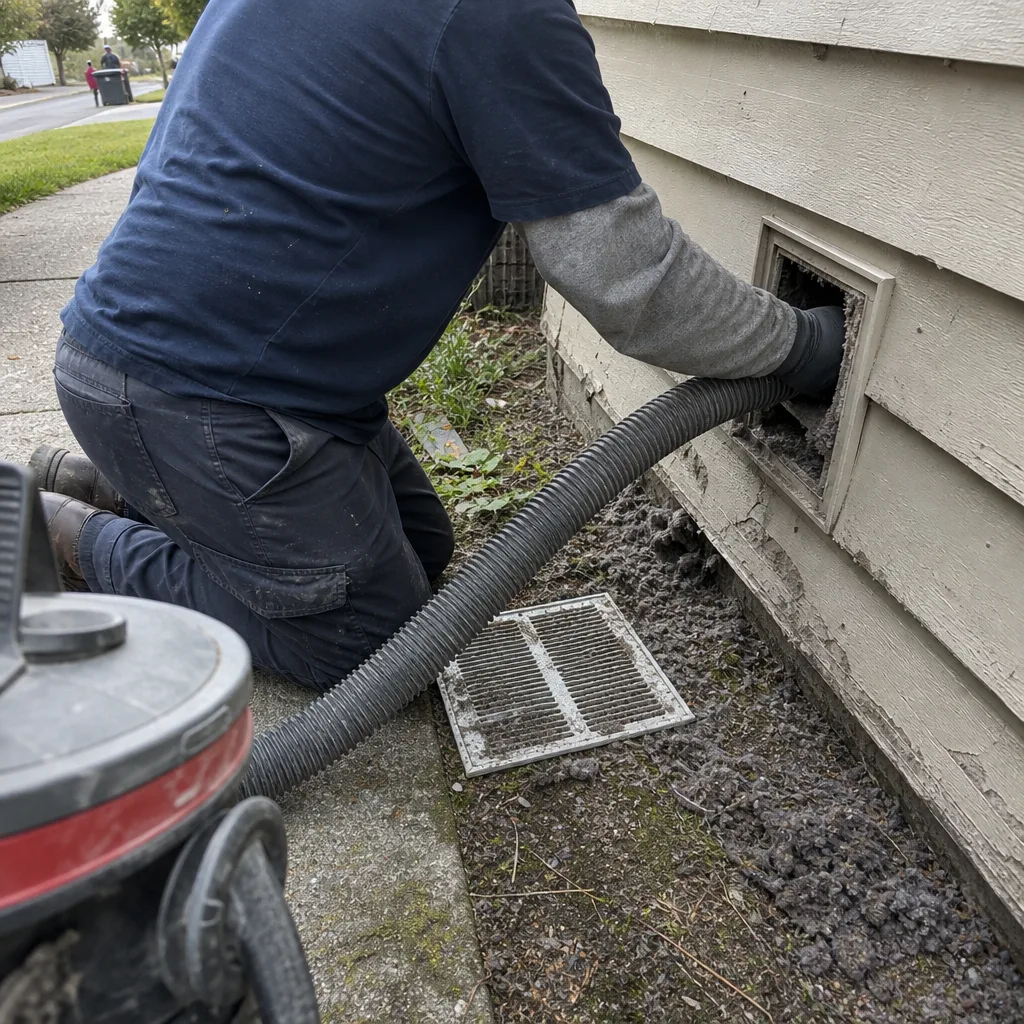 Before
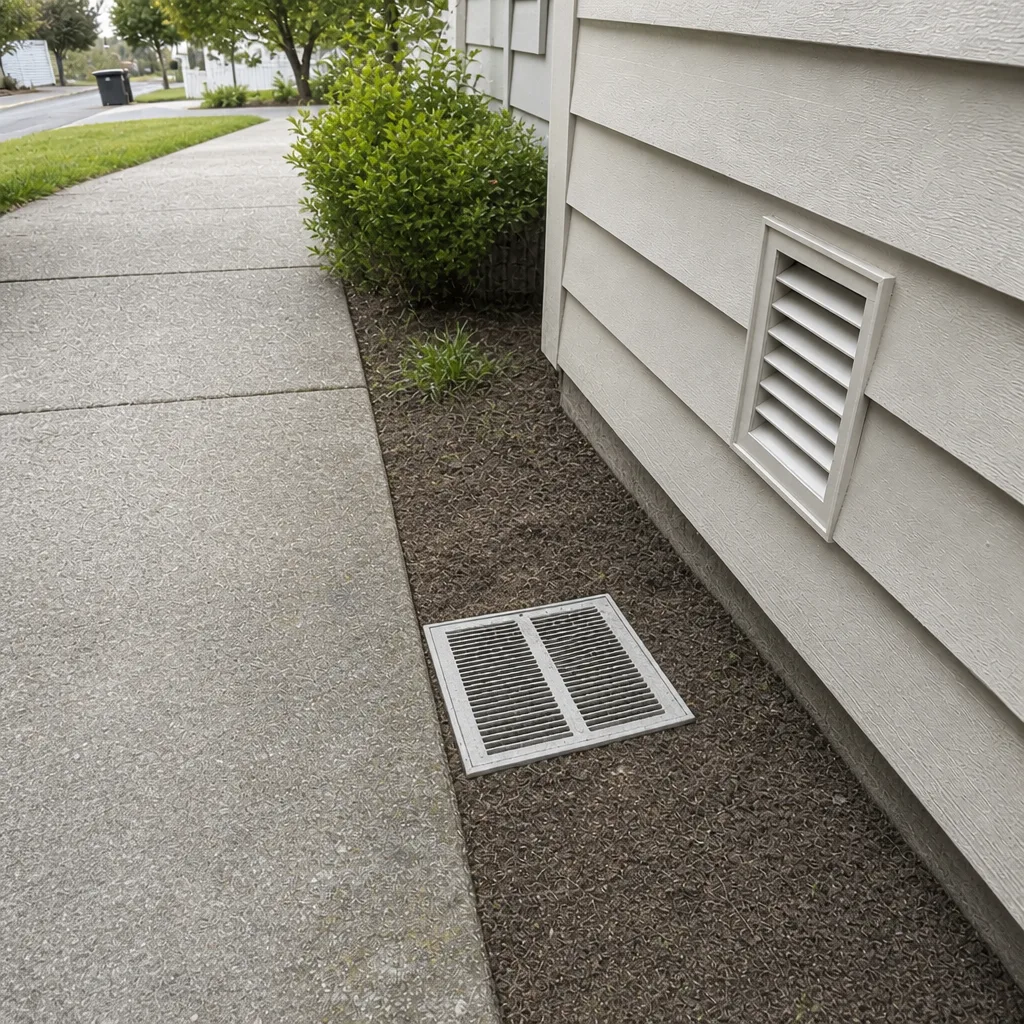 After
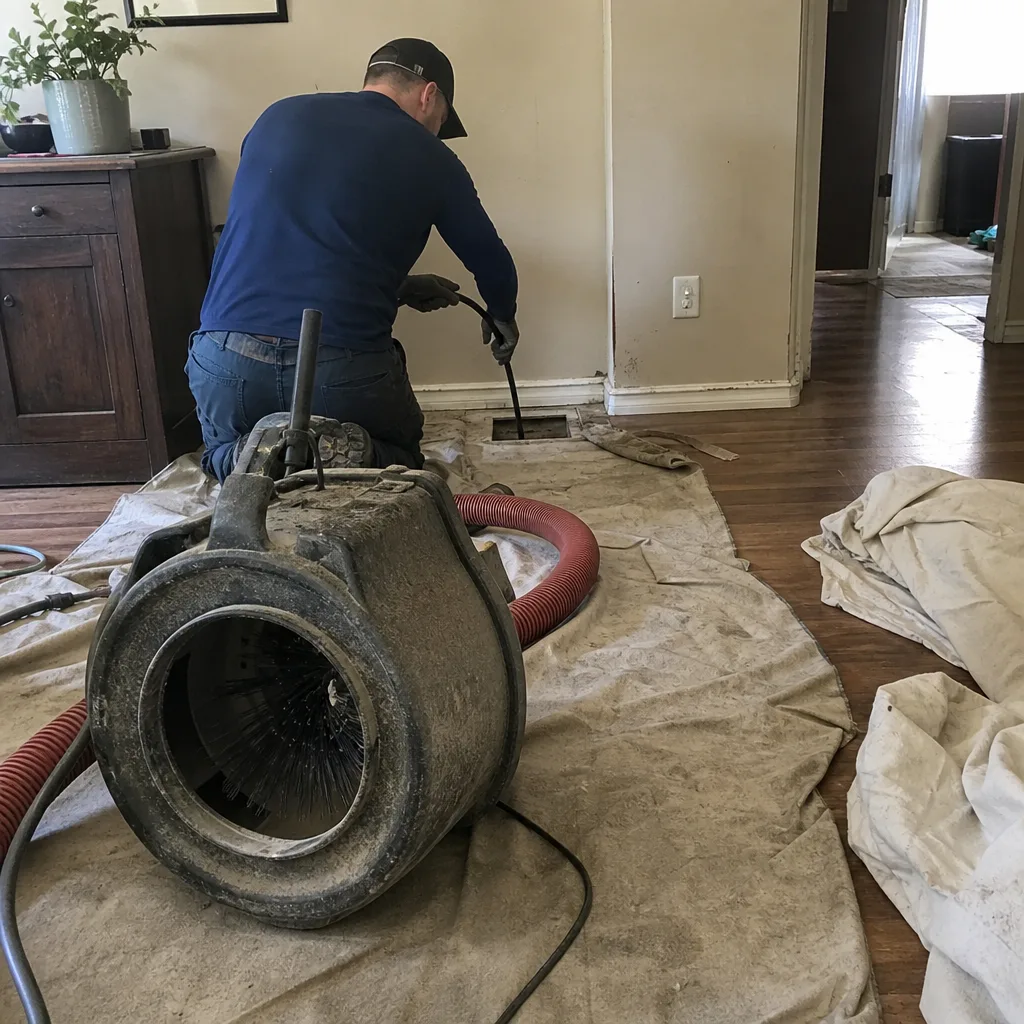 Before
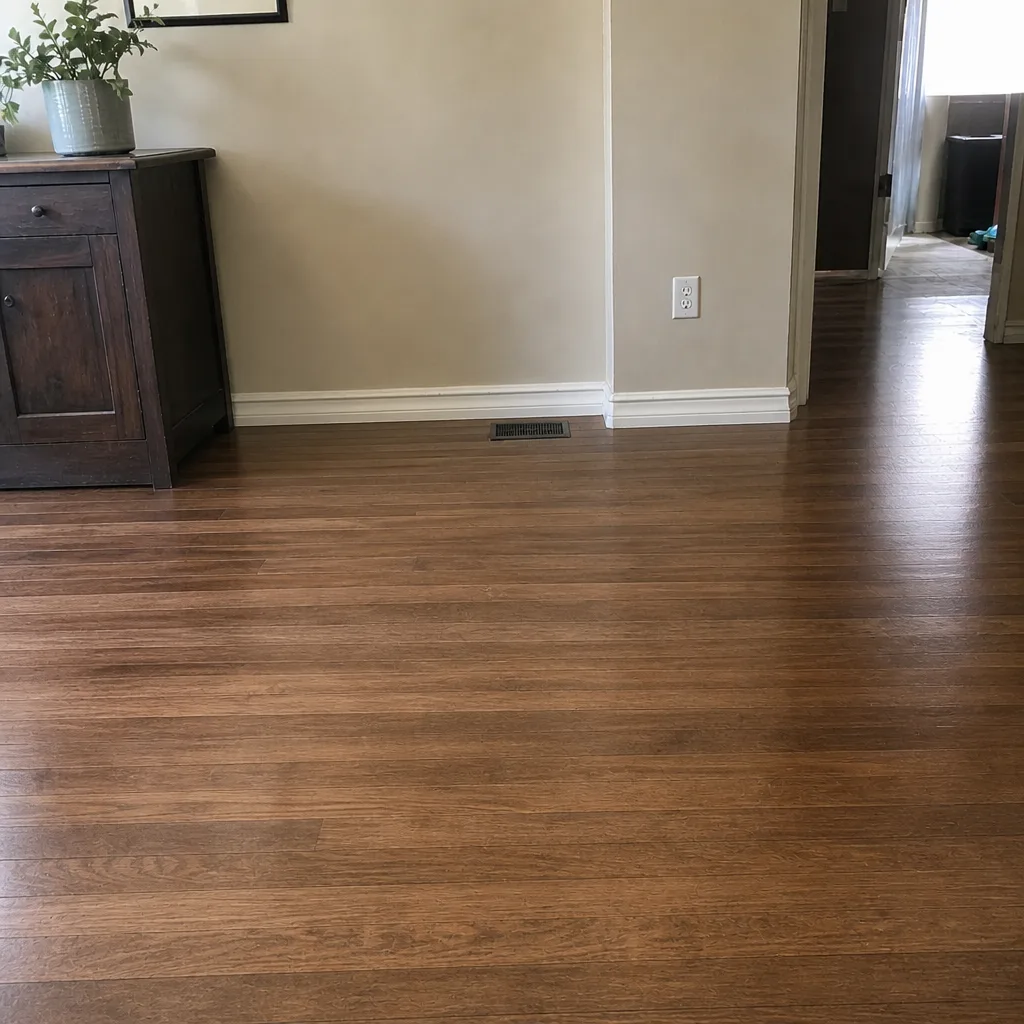 After
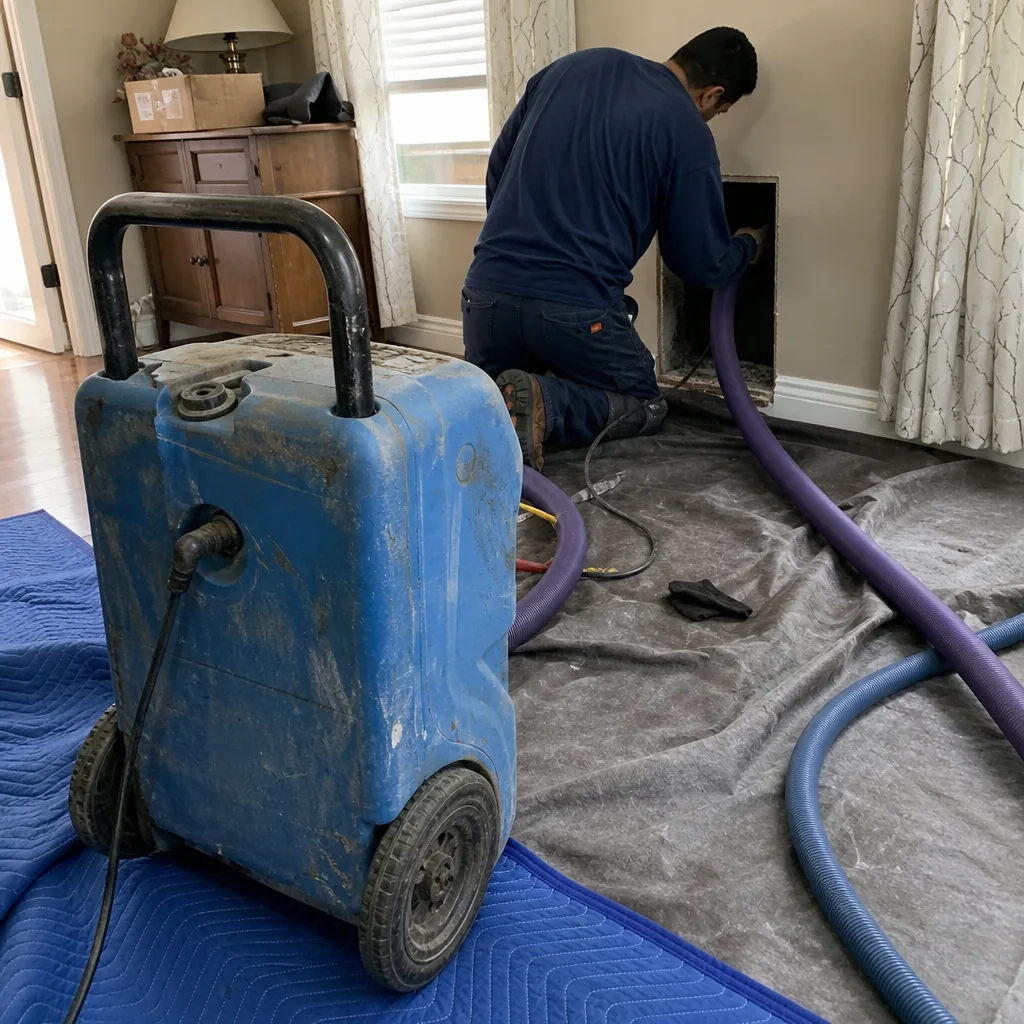 Before
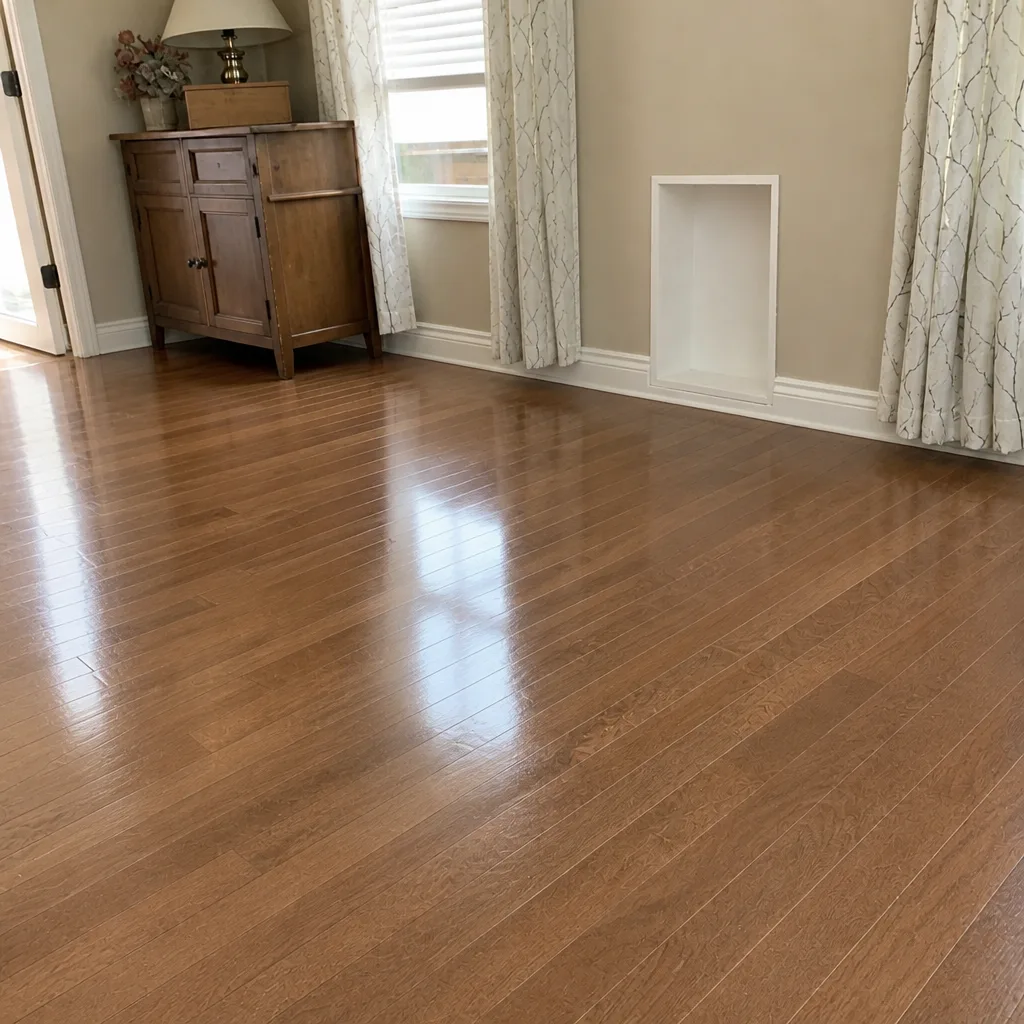 After
When to Call a Professional
Some conditions in a home rule out DIY approaches and should prompt a call before you try to sort it out yourself. If you’re seeing visible debris blowing out of registers when the system turns on, you need professional assessment. If there’s a persistent musty smell that returns after every filter change, that’s often a moisture indicator that points back to the ducts or air handler. Recent renovations, pest activity, a new baby in the house, or chronic allergy flare-ups are all reasons to have someone inspect and clean the system properly. Disconnected ducts and torn flex runs are a professional repair – a taped DIY fix will leak again within the heating season. And if you’re a landlord or property manager on South Hill preparing a unit for a new tenant, an inspection with documentation is a defensible record of what the system looked like before and after turnover.
South Hill Air Duct Cleaning offers free estimates in South Hill – call (855) 510-1735. We answer 24/7. Fast dispatch from 7am to 7pm, Sunday through Friday.
Frequently Asked Questions
The price depends on system size, duct material, accessibility, and scope (whether repairs, sanitizing, or HVAC cabinet cleaning are included). Most South Hill homes fall into a range where a whole-system clean with a proper scope isn’t the $99-ad number, and it isn’t a luxury service either. The final price is set by the written estimate after we’ve looked at your system, not by a per-vent multiplier. Call (855) 510-1735 for an exact quote – estimates are free.
Because the scope is different. A cheap quote typically means per-vent pricing that changes once the tech is on site, no negative-air equipment, no repairs in scope, no documentation, and no access point plan. Compare two quotes on what’s actually included before comparing the number at the bottom. The cheaper one often costs more once it’s finished.
Ask for before-and-after photos of your own ducts, taken during your own job. Ask for a written summary of conditions found, repairs performed, and any components not reached. A contractor who uses negative-air equipment with HEPA filtration can produce this documentation because they already operate with it in place. If a contractor can’t show you what changed, they didn’t finish the job – they finished the appointment. Call (855) 510-1735 to book an assessment.
Most homes need professional duct cleaning every few years, more often if there are pets, recent renovations, pest activity, water intrusion, or allergy symptoms in the household. New construction and freshly renovated homes should be assessed within the first year, because construction debris and dust migrate into the ducts during the build. The right answer for your home depends on what the inspection finds – not on a company’s uniform schedule.
If there’s visible growth on a register, persistent musty odors that return after filter changes, or evidence of water intrusion near the air handler, an inspection is worth doing before cleaning. Cleaning a system that has active moisture issues can spread spores rather than remove them. Professional duct cleaning should include an inspection step and, if needed, targeted sanitizing with documented surface treatment.
In most cases, yes – because duct repair and sealing are handled in-house rather than referred out. If the inspection finds a disconnected joint, a torn flex run, or a joint separated by settling, the technician seals or reconnects it during the same visit rather than scheduling a second appointment with a second contractor. That closed loop is one of the reasons we offer repair and sealing as a core service rather than an add-on. Call (855) 510-1735 to schedule an inspection.
The Bottom Line
The lack of a duct cleaning license in Washington means the homeowner does the vetting. That’s fair, and the vetting is manageable. Ask five questions. Check the registration. Get the scope in writing. Compare quotes on scope, not on the number at the bottom. Match the equipment to your duct type, and confirm the contractor can repair what they find rather than referring it out. Do those things and you’ll separate real contractors from price shoppers before anyone has access to your HVAC system. If you’d rather start your vetting with someone who can answer these questions up front, and you want the full air pathway – ducts, dryer vents, HVAC components, and filtration – handled by one provider, we’re ready to talk.
Call (855) 510-1735 for a free estimate. We answer 24/7. Fast dispatch from 7am to 7pm, Sunday through Friday. Ask us what we found – we document conditions before and after so you know exactly what changed.
Written by the team at South Hill Air Duct Cleaning.