
Last updated November 25, 2026
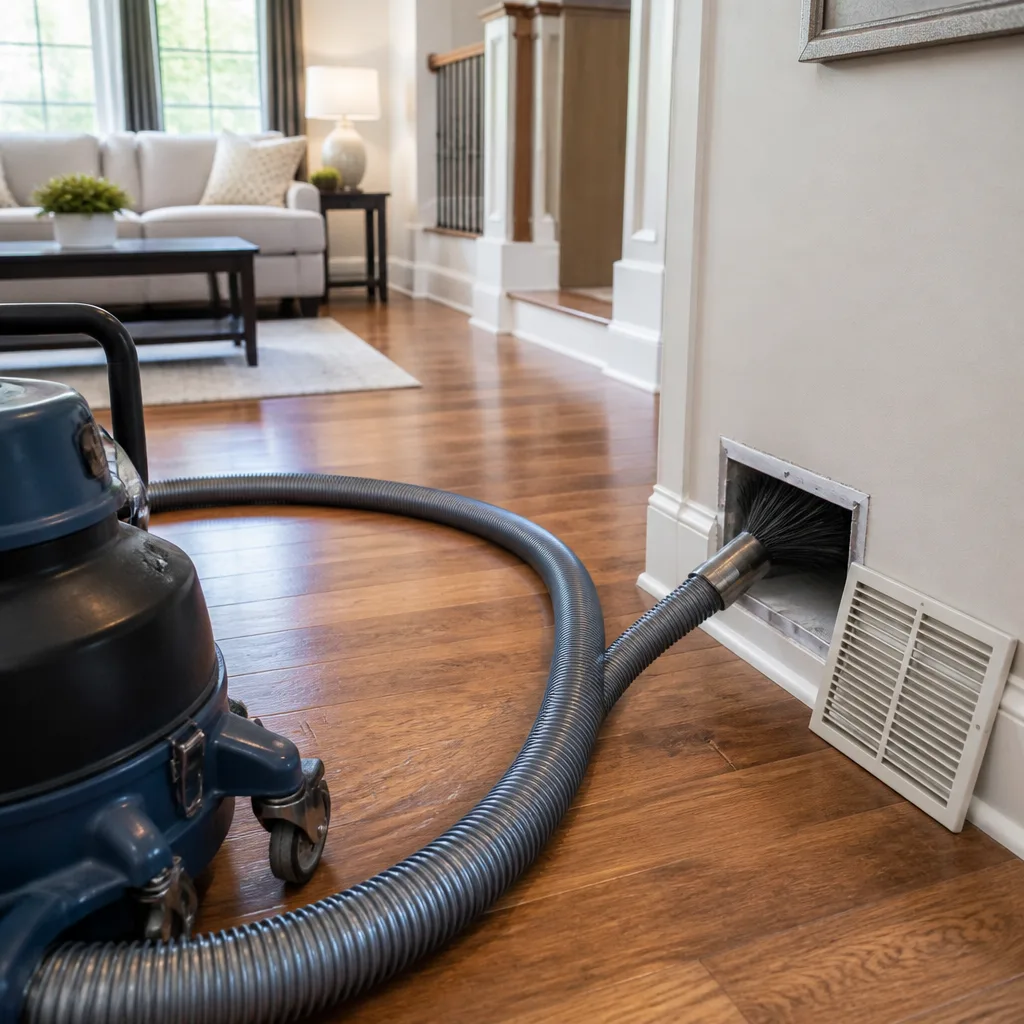 Whole-home duct cleaning
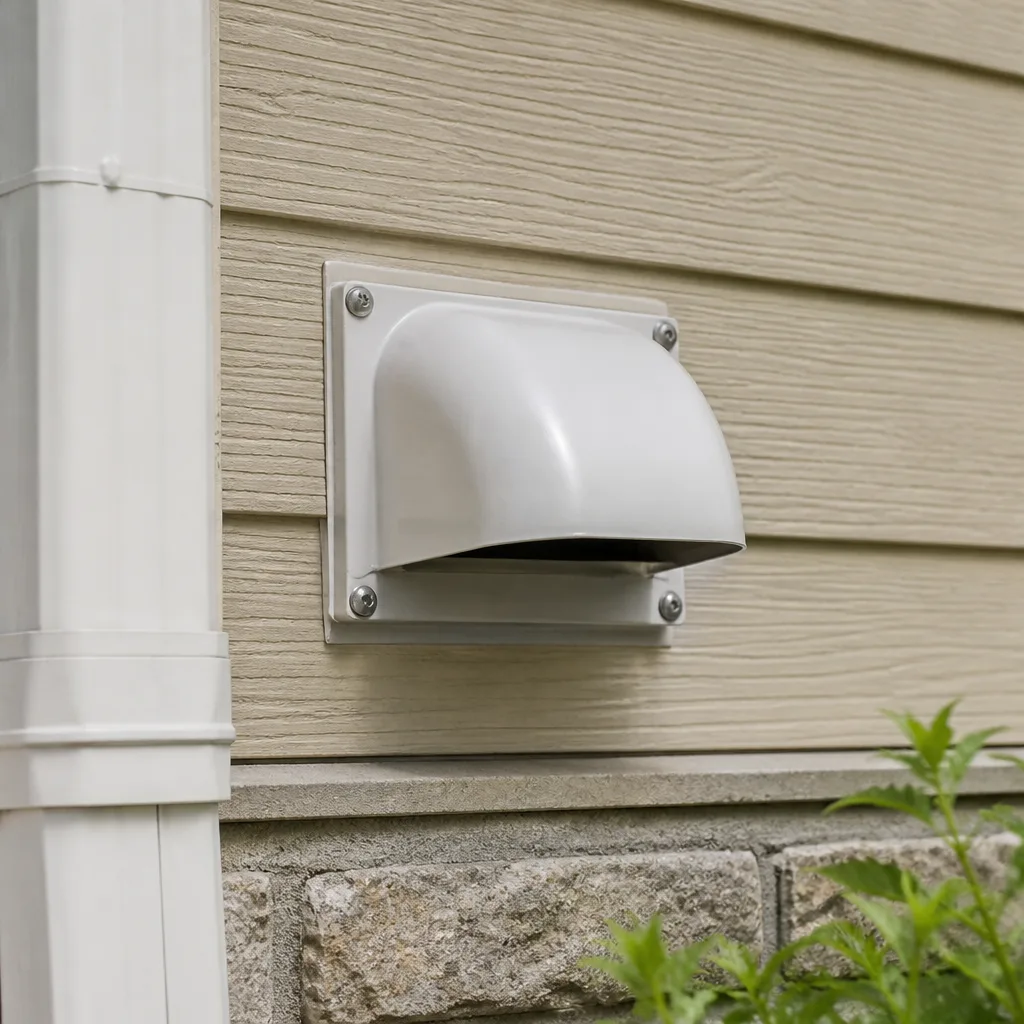 Dryer vent cleaning
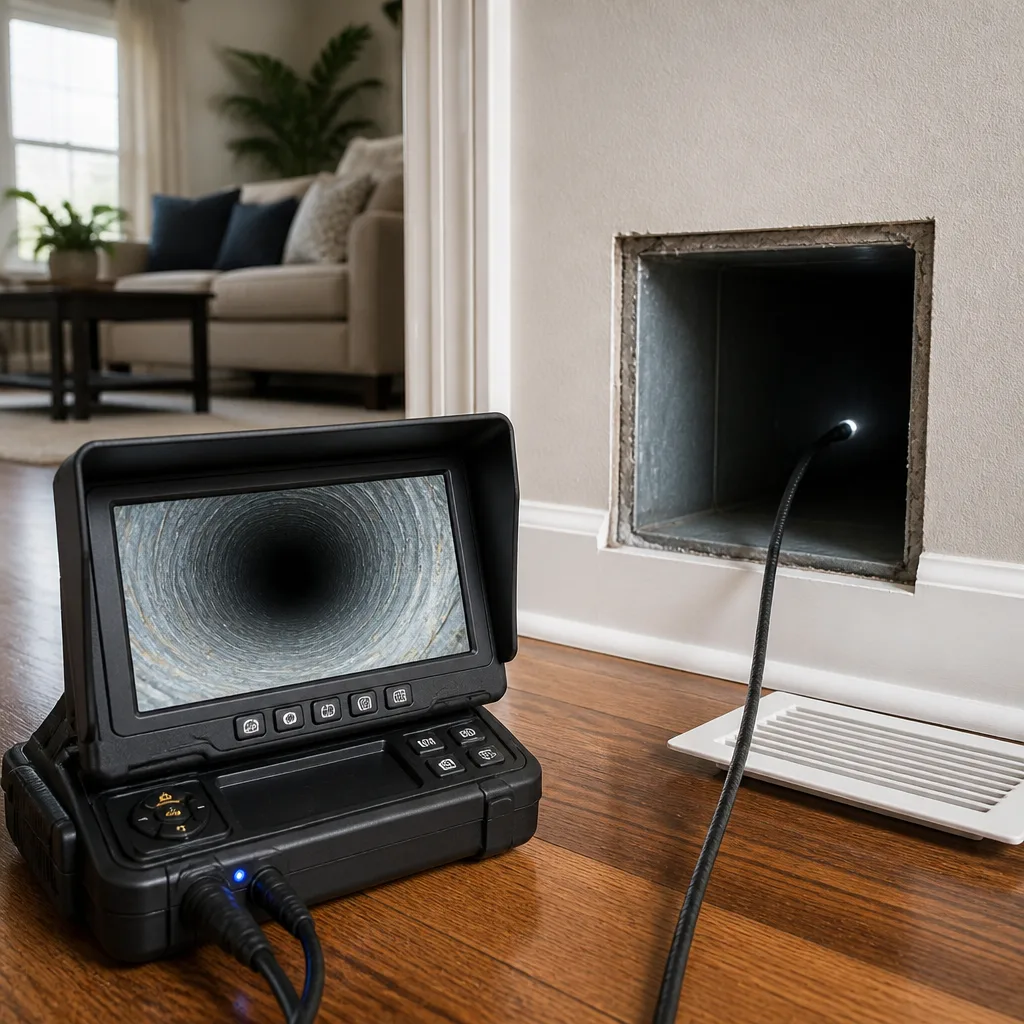 Camera inspection
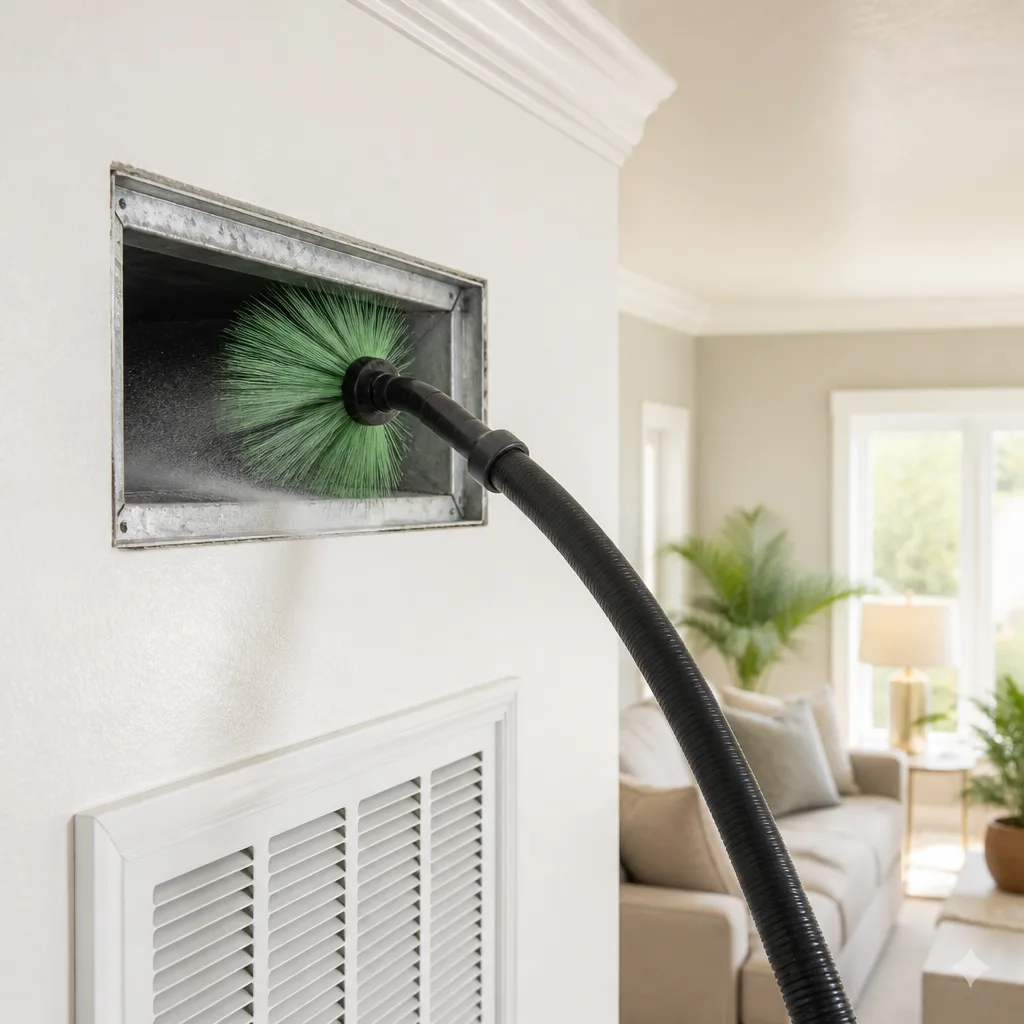 Sanitizing & deodorizing
Whole-system duct and dryer vent check with before-and-after photos - you see exactly what came out of your vents
That "$99 whole-house special" is a bait ad - the real number appears once they are in your hallway, or the "clean" is a shop-vac at the register. We photograph the inside of your ducts before and after instead.
Air Duct Cleaning Emergency Preparedness Guide for South Hill Homes
After a kitchen fire, most homeowners focus on visible char and smoke damage. Meanwhile, the HVAC system, if it was running during or after the event, has pulled smoke particles, soot, and combustion byproducts into the duct system and distributed them throughout the house. Running that system again before duct remediation restarts the contamination cycle. The same pattern repeats after a flood or a major wildfire smoke event: the duct system becomes a primary contamination vector while every restoration checklist treats it as an afterthought. This guide covers when to shut down the HVAC system, what soot and mold contamination actually look like inside ducts, how to document contamination for your insurance adjuster, and how to sequence duct work correctly within a broader restoration project. Every point applies to South Hill homes, where crawl space air handlers and older duct layouts change the answer.
Quick Answer
If your South Hill home has been through a fire, flood, sewage backup, or heavy wildfire smoke event, shut down the HVAC system immediately and keep it off until the ductwork is evaluated. Standard vacuuming does not remove post-fire soot, combustion byproducts, or mold spores from duct interiors; contact cleaning with rotary equipment and HEPA negative-air containment is the correct method. Address duct remediation before, or in careful sequence with, other restoration work, and document conditions thoroughly for your insurance adjuster before anything is removed.
Styles & brands we work with
- Whole-home duct cleaning
- Dryer vent cleaning
- Camera inspection
- Sanitizing & deodorizing
Table of Contents
- Why the duct system becomes the real contamination problem
- After a fire: the immediate shutdown and remediation protocol
- Flood and moisture events: the 48-72 hour mold window
- Wildfire smoke events: full duct remediation or filter replacement only?
- What to tell your insurance adjuster about duct contamination
- Sequencing duct work with other emergency contractors
- What proper emergency duct equipment looks like
- Common mistakes to avoid
Why the duct system becomes the real contamination problem
Air ducts are a closed loop that runs through the whole house. When the blower runs, it moves hundreds of cubic feet of air per minute through that loop. Whatever is suspended in the air, whether soot from a fire, mold spores from a wet crawl space, or smoke particles from a wildfire event, gets drawn into the return side and pushed out through every supply register in the house.
What makes this worse than surface contamination is that ducts are hard to see and rarely inspected. A homeowner can wipe down walls and vacuum carpets and feel the job is done, while the interior of the return trunk and supply branches still hold the fine particulate that caused the smell or the health symptoms in the first place. Running the system again re-aerosolizes that material into every room, every time.
South Hill homes have two features that matter here. First, many were built with crawl space air handlers, so the return system often runs through unconditioned, damp, ground-level space. Second, duct systems in the older housing stock commonly include flex duct sections with sagging runs and connections that were never sealed. Both features mean the duct system in a South Hill house can pick up and hold contamination far more readily than a tight, code-sealed system in newer construction. If you suspect yours has been compromised, have a look at how air duct cleaning works as a diagnostic and remediation step, not just a cosmetic service.
The practical point: after any event that produces smoke, water, or biological contamination inside a home, the duct system needs to be evaluated on its own terms, not assumed fine because the registers look clean.
After a fire: the immediate shutdown and remediation protocol
Shut the HVAC system off at the thermostat and, ideally, at the breaker, the moment a fire is out and you’re back inside. Every minute the blower runs after a fire spreads soot and combustion byproducts further into the ductwork and every room it serves. If the system was running during the fire itself, assume the entire duct circuit is contaminated, not just the rooms nearest the fire.
Soot in ducts is not uniform. Fire produces two general types of residue: a dry, powdery soot that clings loosely, and a wet, oily soot that smears and bonds to duct surfaces. The wet type is common after kitchen fires involving grease and after any fire where synthetic materials burned. Standard vacuuming with a shop vac or a consumer-grade duct attachment will not lift oily soot from the interior of a flex duct. It smears it or blows it further along.
This is why fire restoration is not a standard duct cleaning job. The correct sequence for a South Hill home looks like this:
- Shut down the HVAC system at the thermostat and breaker. Leave it off.
- Do not run the system “to see if it’s okay.” A test run re-contaminates the whole house.
- Photograph conditions before anything is disturbed, including registers, return grilles, and any visible soot near the air handler.
- Have the duct system evaluated by a technician using contact cleaning equipment and HEPA negative-air containment, not a standard residential vacuum.
- Clean the full air pathway: returns, supply branches, air handler cabinet, and coil, not just the visible ducts.
- Replace the filter and address any filtration upgrades the technician recommends based on what was found.
- Certify conditions after cleaning with post-cleaning documentation before the system is restarted.
Fire remediation on ductwork is genuinely dangerous territory for a homeowner to improvise. Soot and combustion byproducts are respiratory irritants, and the air handler cabinet may still be hot or contain damaged electrical components. Keep the system off and let a trained professional handle the cleaning and restart.
Flood and moisture events: the 48-72 hour mold window
Mold can begin growing on wet building materials within 48 to 72 hours of a water intrusion, and duct interiors are no exception. In South Hill homes, this timeline matters more than most homeowners realize, because crawl space air handlers sit in the exact environment where a slow leak, a backed-up drain, or a sewage event can leave the duct exterior and interior wet for days before anyone notices.
Once mold establishes itself inside a duct system, ordinary cleaning may not be enough. The growth attaches to the duct liner, flex duct interior, and the air handler cabinet surfaces. Remediation in that situation needs containment, HEPA filtration, and a post-cleaning sanitizing step, followed by documentation that the contamination is gone.
What South Hill homeowners should check in the first 72 hours after any water event:
- Whether the air handler in the crawl space or mechanical closet got wet, including the insulation and cabinet exterior.
- Whether any duct section runs through a space that flooded or remained damp.
- Whether flex duct sections were submerged or sat in standing water.
- Whether the return air path picked up moisture from wet carpet, drywall, or flooring during any demolition.
- Whether there’s a musty smell when the system first runs, especially first thing in the morning.
If any of those answers is yes, do not run the system. A sewage backup is a stronger case still: category 3 water carries pathogens, and any duct material that came into contact with it needs to be evaluated, cleaned, or replaced, not just dried out. This is where remediation-grade equipment matters. Abatement Technologies equipment in the right hands is built for contamination containment at this level, and consumer-grade vacuums are not. For a related fire-risk event that South Hill homeowners sometimes discover during restoration work, our dryer vent cleaning service is worth scheduling while the walls are open.
Wildfire smoke events: full duct remediation or filter replacement only?
Not every smoke event requires full duct remediation. In many South Hill homes, a single heavy smoke event with the HVAC system off and windows closed calls for a filter replacement and a cleaning of accessible registers, not a full duct cleaning. The decision comes down to how long the system ran during the event, how long the smoke lingered indoors, and whether the home has sensitive occupants or existing duct issues.
Here’s a practical assessment framework:
- Did the HVAC system run at any point during the smoke event? If yes, the return side likely pulled particulate in.
- Does the home still smell of smoke after windows and doors have been open for a full day? Persistent odor points to contamination held in porous surfaces, including duct liner and filter media.
- Do occupants with allergies or asthma still show symptoms indoors after the outdoor air has cleared? Indoor symptoms that clear outdoors suggest contamination in the system.
- Is the duct system older, flex-heavy, or visibly unsealed? These systems hold particulate longer and are harder to assess without inspection.
If two or more of those answers is yes, a full duct evaluation is warranted. If not, start with a filter change to a higher-MERV filter matched to your system’s capabilities, plus a cleaning of any accessible registers and returns. Honeywell and Aprilaire filtration products are a reasonable upgrade path when the technician confirms the system can handle the higher resistance; not every blower can.
One caution specific to the South Hill area: the wildfire smoke season is not the only time indoor air quality suffers. Prescribed burns and inversions in the valleys around the Puyallup area can produce smoke events that are shorter but frequent enough to accumulate contamination over a season. If you find yourself changing filters three or four times in a smoke season, the ducts are probably holding more than the filters can catch. For a full-system approach, our HVAC cleaning service covers the air handler and coil, not just the ducts.
What to tell your insurance adjuster about duct contamination
Document duct contamination the same way you’d document a damaged roof or wet drywall: with photos, a written scope, and a reason the contamination is a consequence of the covered event rather than a pre-existing condition. Most adjusters are not duct specialists, and they’ll rely on the documentation your contractor provides. That documentation needs to establish three things clearly: what was found, what caused it, and what the correct remediation scope is.
Before any cleaning or removal begins, gather this:
- Photos of every visible register, return grille, and the air handler, both before and after the event.
- Photos of the duct interior with a camera or borescope, showing soot, moisture, or visible growth.
- A brief written description of what happened, including dates, whether the HVAC was running during the event, and how long it stayed off afterward.
- Any receipts for filter changes or interim cleaning attempts.
- A scope of work from the contractor describing what will be cleaned, contained, sanitized, and certified.
Where homeowners get into trouble is signing off on a settlement that removes duct remediation from the scope before it’s been properly evaluated. If an adjuster offers a flat allowance for “duct cleaning” without an inspection, ask for a documentation-first evaluation and a written scope from a technician. Post-fire and category 3 water events are the two situations where a simple cleaning allowance usually falls short of the actual scope, because oily soot and pathogen contamination call for containment and post-cleaning certification, not just a brush-and-vacuum.
South Hill homes in older subdivisions sometimes have duct work that was added or modified by a previous owner, so the scope can also include repair and sealing of disconnected sections once they’re found. Duct Repair & Sealing is a category we handle in-house, so the scope and the work stay in one place, which simplifies the paperwork on your end.
Sequencing duct work with other emergency contractors
The most common post-emergency mistake we see is timing, not technique. Duct remediation done too early gets undone by demolition dust that follows. Done too late, and contaminated air has been running through the house for weeks. The right place for duct work is after the major demolition and rough cleanup is finished, and before any finishing work, painting, or soft furnishings go back in.
Here’s how a coordinated sequence typically looks in a South Hill home:
- Emergency response: shut off HVAC, contain damaged areas, stop any active water intrusion.
- Demolition and dry-out: remove damaged materials, dry wet structure, address the source of the water or fire.
- Rough cleanup: remove heavy debris and surface soot, but keep HVAC off.
- Duct evaluation and remediation: contact cleaning, containment, sanitizing, and post-cleaning certification.
- Duct repair and sealing: fix any disconnected, torn, or crushed sections while the system is open for inspection.
- HVAC component cleaning and filter replacement: air handler, coil, and new filter.
- Finishing work: drywall, paint, flooring, furnishings.
- System restart and verification: after everything is clean and dry.
The ordering matters because step 7 generates dust that can re-contaminate freshly cleaned ductwork if the registers aren’t properly covered, and step 4 done before step 3 means the duct interiors pick up heavy debris again during demolition. Coordinate with your restoration contractor so the duct work lands in the right window. This is where a single provider handling multiple service categories helps: the same company that cleans the ducts can also handle the dryer vent and air sanitizing, so you’re not coordinating three contractors through a restoration schedule that’s already complicated.
What proper emergency duct equipment looks like
The difference between an emergency-grade duct job and a standard cleaning job comes down to three capabilities: contact cleaning, negative-air containment, and post-cleaning certification. If a contractor can’t describe all three, the job isn’t set up for a post-fire or post-flood scenario.
Contact cleaning means the equipment physically agitates the contamination loose from the duct surface rather than just pulling air through. We use Rotobrush rotary contact-cleaning systems, which run a brush through the duct interior while negative air pulls the loosened material out. A shop vac running on the register doesn’t do this, and neither does a compressed-air “whip” alone.
Negative-air containment means the work area is held at lower pressure than the surrounding space so that loosened contamination is pulled toward the HEPA filter and not into the living space. Our Nikro negative-air units are HEPA-rated for this purpose, and in a serious contamination event, Abatement Technologies equipment lets us work at the containment level that fire and mold remediation requires.
Post-cleaning treatment and documentation matter as much as the cleaning itself. Guardsman-brand protection products are used in-process to treat duct surfaces after cleaning, and the technician documents conditions before and after so you know exactly what changed. If you want to see the whole-system approach we work from, our South Hill Air Duct Cleaning page explains how the pieces fit together. Our technicians have up to 14 years of experience, and if you ask what they found in your system, the answer will be specific, not a shrug.
Common Mistakes to Avoid
- Running the HVAC “just to see if it’s okay” after a fire. Every minute the system runs re-spreads soot through the house. Shut it off at the breaker and leave it off.
- Assuming a filter change solved a wildfire smoke event. A filter catches what’s floating through it while it runs; it doesn’t clean contamination already held in duct liner and flex sections. If symptoms and smell persist indoors, the ducts need an evaluation.
- Waiting past 72 hours after a flood to address the ducts. Mold begins growing on wet materials in the 48-72 hour window, and crawl space air handlers in South Hill homes are especially vulnerable because they sit in the dampest part of the structure.
- Letting a restoration contractor order duct “cleaning” as a line item without an inspection first. An adjuster’s allowance without a documented scope will not cover containment and post-cleaning certification on a serious contamination event.
- Cleaning the ducts before demolition is done. Demolition dust re-contaminates freshly cleaned ducts if the register covers aren’t maintained. Sequence duct work after rough cleanup and before finishing work.
- Scheduling duct cleaning with a general contractor and duct repair with someone else. If a disconnected or torn section is found during cleaning, you want it repaired and sealed the same visit, not referred out and left until another appointment.
- Skipping the post-cleaning documentation. If you have to file a claim, resell, or simply want to know whether the work was actually done, before-and-after photos of your own ducts are the proof.
See the difference
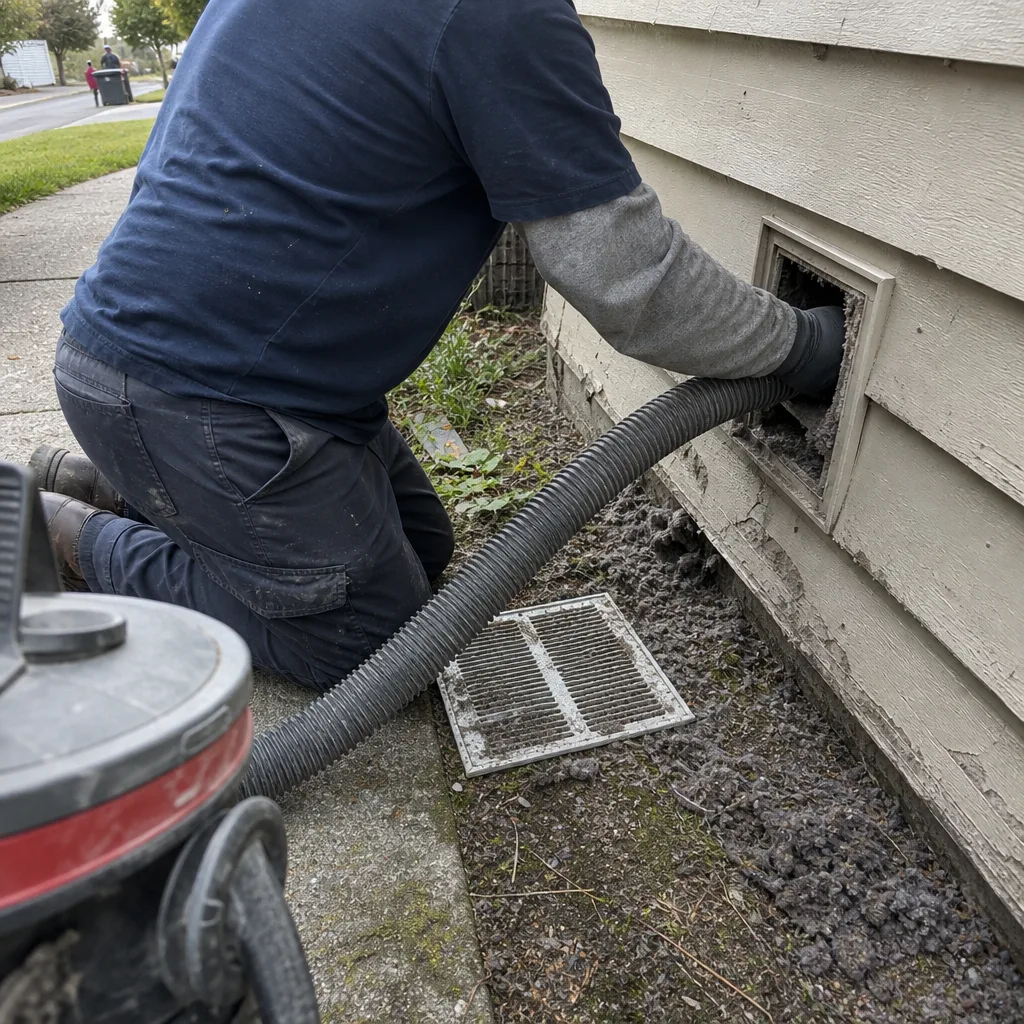 Before
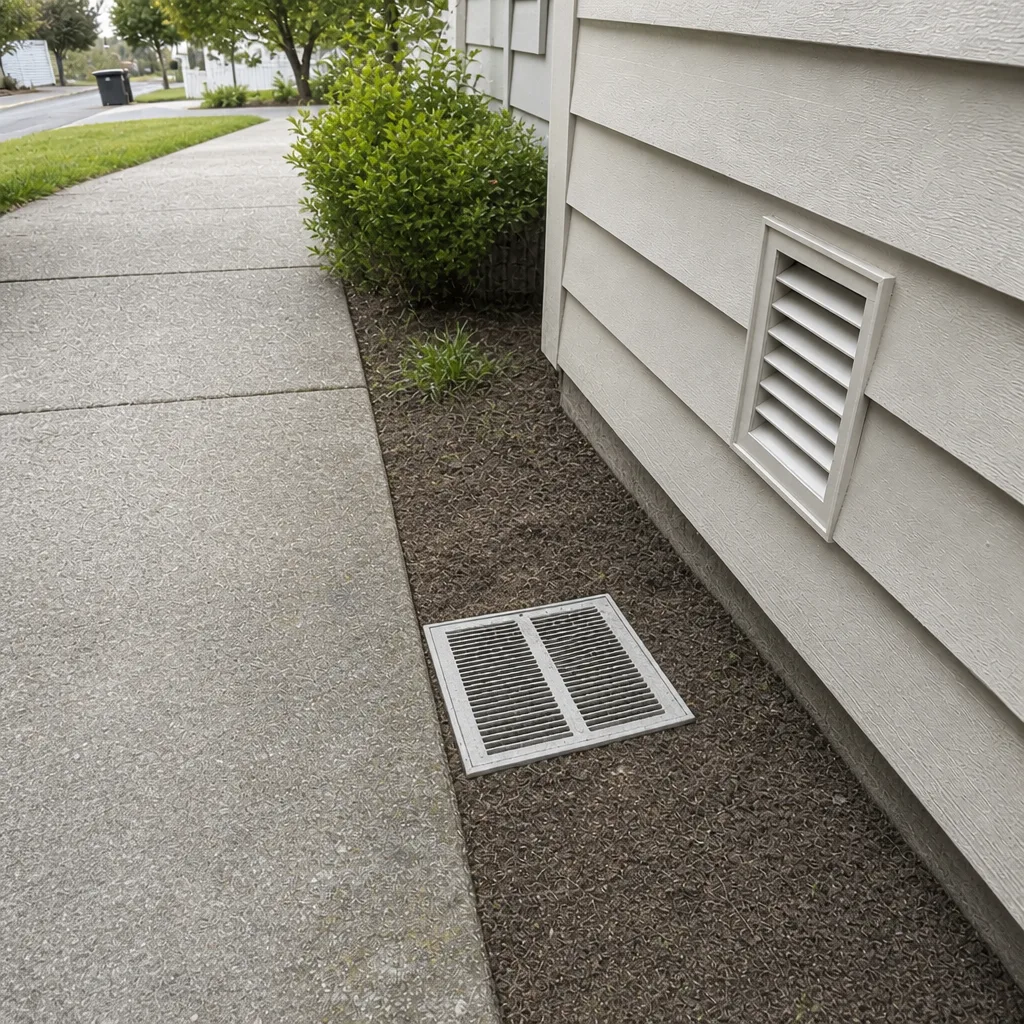 After
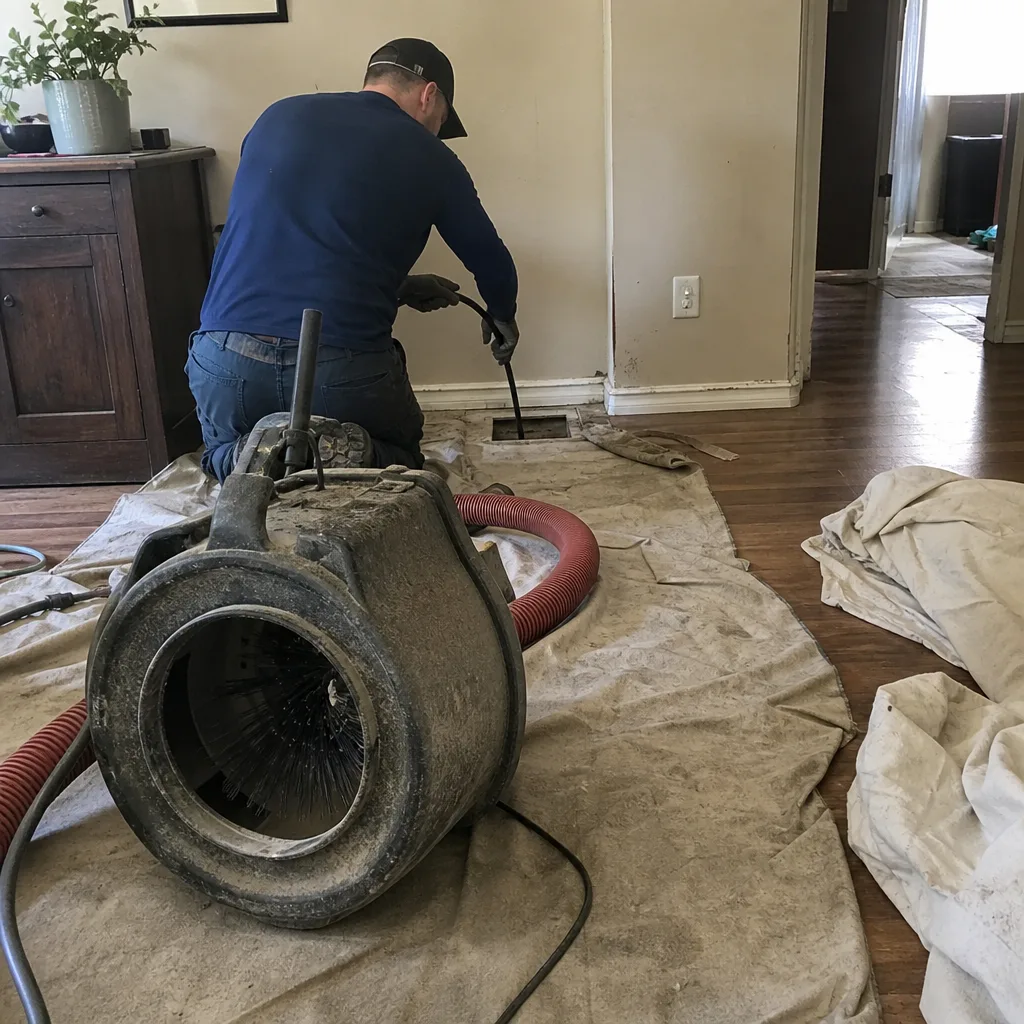 Before
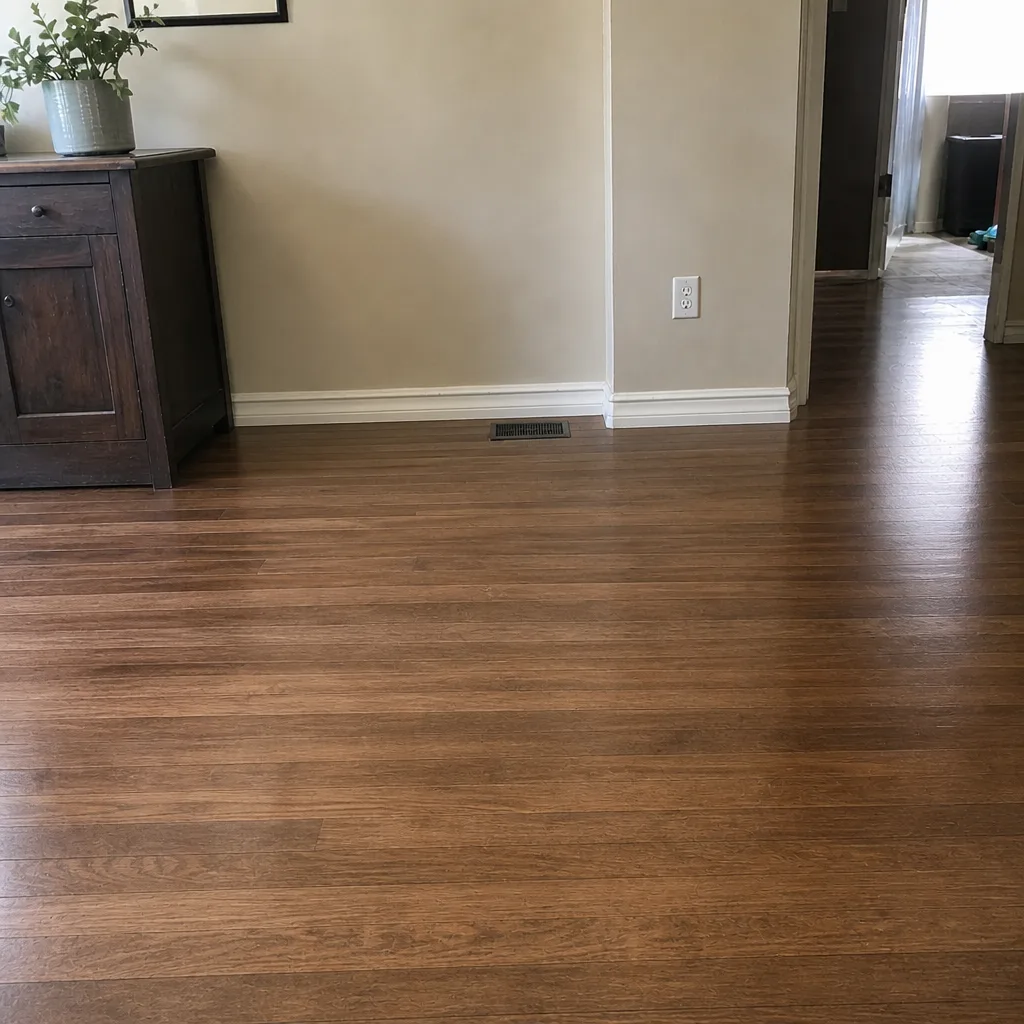 After
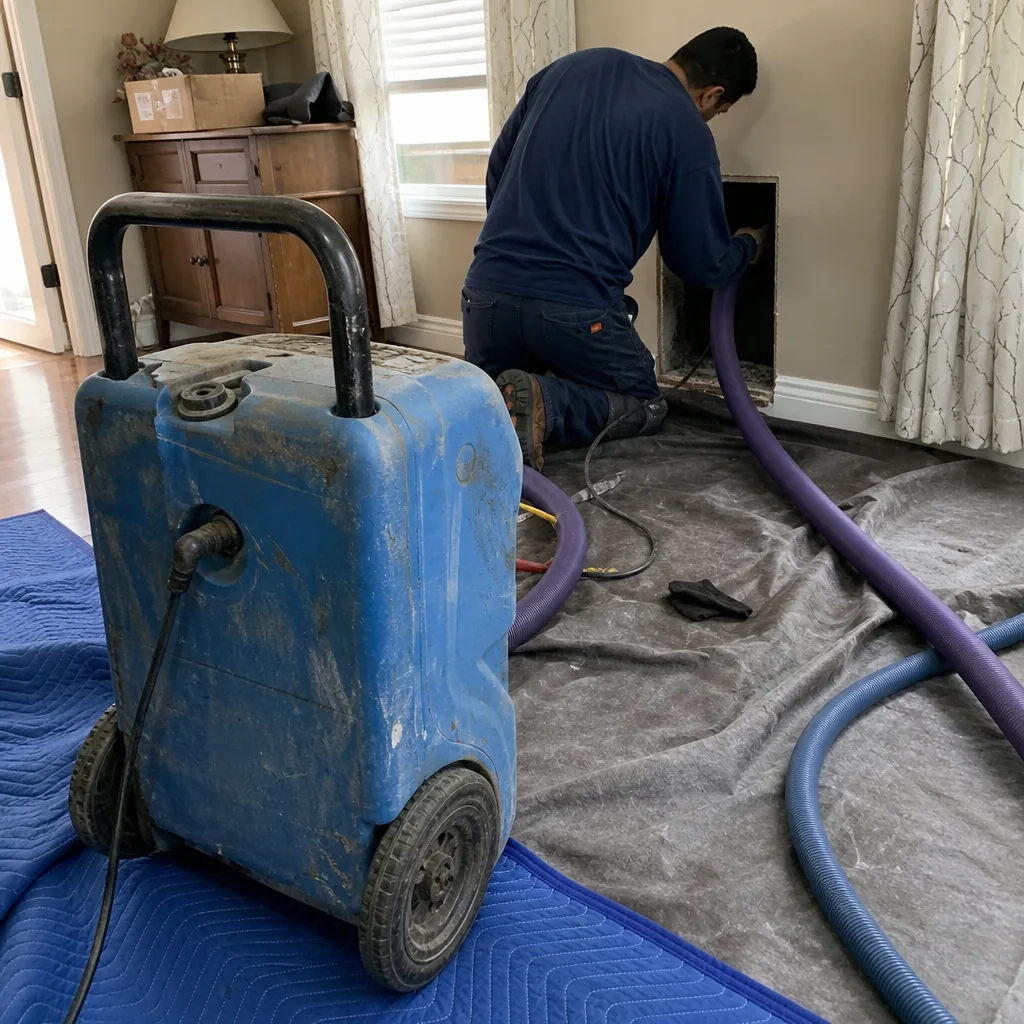 Before
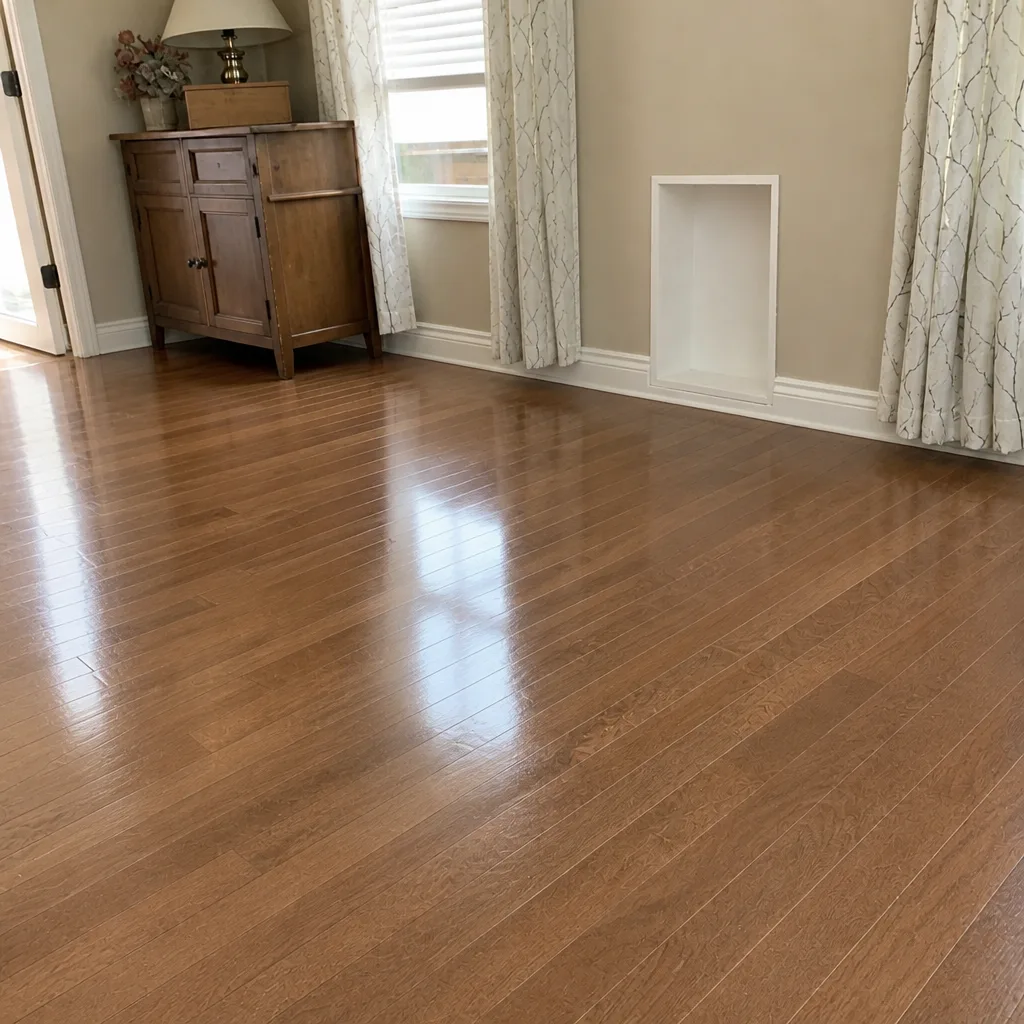 After
When to Call a Professional
Call a professional if the HVAC system ran during or after a fire, if any part of the air handler or ductwork got wet in a flood or sewage backup, if the house still smells of smoke after outdoor air has cleared, or if anyone in the household has persistent indoor respiratory symptoms after a smoke or moisture event. Call immediately if the system was running during a fire and hasn’t been shut off; every hour adds scope. Also call if you’re coordinating an insurance claim and need a documented scope of duct remediation before a settlement is finalized. South Hill Air Duct Cleaning offers free estimates in South Hill. Call (855) 510-1735. We answer 24/7. Fast dispatch from 7am to 7pm, Sunday through Friday. Estimates are free, and the written estimate sets the price before any work begins.
Frequently Asked Questions
Post-fire and post-flood duct remediation is priced per job by a written estimate, because the scope varies with the size of the duct system, how far contamination spread, and whether containment and post-cleaning sanitizing are needed. A standard cleaning job and a remediation job are not the same scope, so there’s no single price that fits both. Call (855) 510-1735 for an exact quote. Estimates are free, and the written estimate sets the final price before work starts.
Cheaper quotes usually reflect a smaller scope: a shop-vac style cleaning with no containment, no post-cleaning certification, and no repair of found leaks or disconnected sections. On a contamination event, that scope doesn’t remove soot or mold from the duct interior; it just disturbs it. Ask any contractor to describe their equipment and their post-cleaning documentation before you compare prices. Call (855) 510-1735 for a quote you can compare against what the cheaper option actually covers.
You know because you have before-and-after photos of your own ducts, plus a written description of what was found and what was cleaned. At South Hill Air Duct Cleaning, we document conditions before and after so you can see the change yourself. Ask for the documentation at the end of the visit. Call (855) 510-1735 to schedule.
For a home with no contamination event, a duct cleaning every few years is a reasonable interval, with filter changes on the manufacturer’s schedule in between. After a fire, flood, sewage backup, or heavy smoke event, the timeline is immediate, not scheduled. If you’ve had recent renovations, pest activity, or a persistent musty smell, that’s also a trigger for an evaluation regardless of the calendar. Call (855) 510-1735 to talk through what applies to your home.
No. Running the system after a fire pushes soot and combustion byproducts deeper into the ductwork and into every room it serves, and it makes the remediation scope larger, not smaller. Shut the system off at the breaker and keep it off until the duct system has been evaluated and cleaned. A trained professional should handle the cleaning and the restart.
Coverage depends on your policy and the cause of the loss, and we can’t determine that for you. What we can do is provide the documentation your adjuster needs: photos of conditions before cleaning, a written scope of what needs to be done, and post-cleaning certification showing the work is complete. Get that scope before a settlement is finalized, because a generic allowance often won’t cover containment and sanitizing on a serious event. Call (855) 510-1735 for a documented estimate you can share with your insurer.
The Bottom Line
After a fire, flood, sewage backup, or serious smoke event, the duct system in a South Hill home becomes the main contamination pathway, and treating it as an afterthought is how a restoration project gets undone. Shut the HVAC off immediately. Do not run it to test. Document conditions before anything is disturbed. Sequence duct remediation after demolition and rough cleanup, and before finishing work and the system restart. Ask any contractor to describe their contact-cleaning equipment, containment, and post-cleaning documentation, because that’s what separates real remediation from a standard cleaning. If you want a documented, whole-system evaluation, our full-service approach covers ducts, dryer vents, HVAC components, duct repair, and air sanitizing from a single provider, and the dryer vent and duct repair scope can be bundled into the same visit to reduce the number of appointments during an already difficult restoration.
Call (855) 510-1735 for a free estimate. We answer 24/7. Fast dispatch from 7am to 7pm, Sunday through Friday. Or, if you want to see the full set of services we handle for South Hill customers, our South Hill Air Duct Cleaning page lays it out.
Written by the team at South Hill Air Duct Cleaning.