
Last updated November 25, 2026
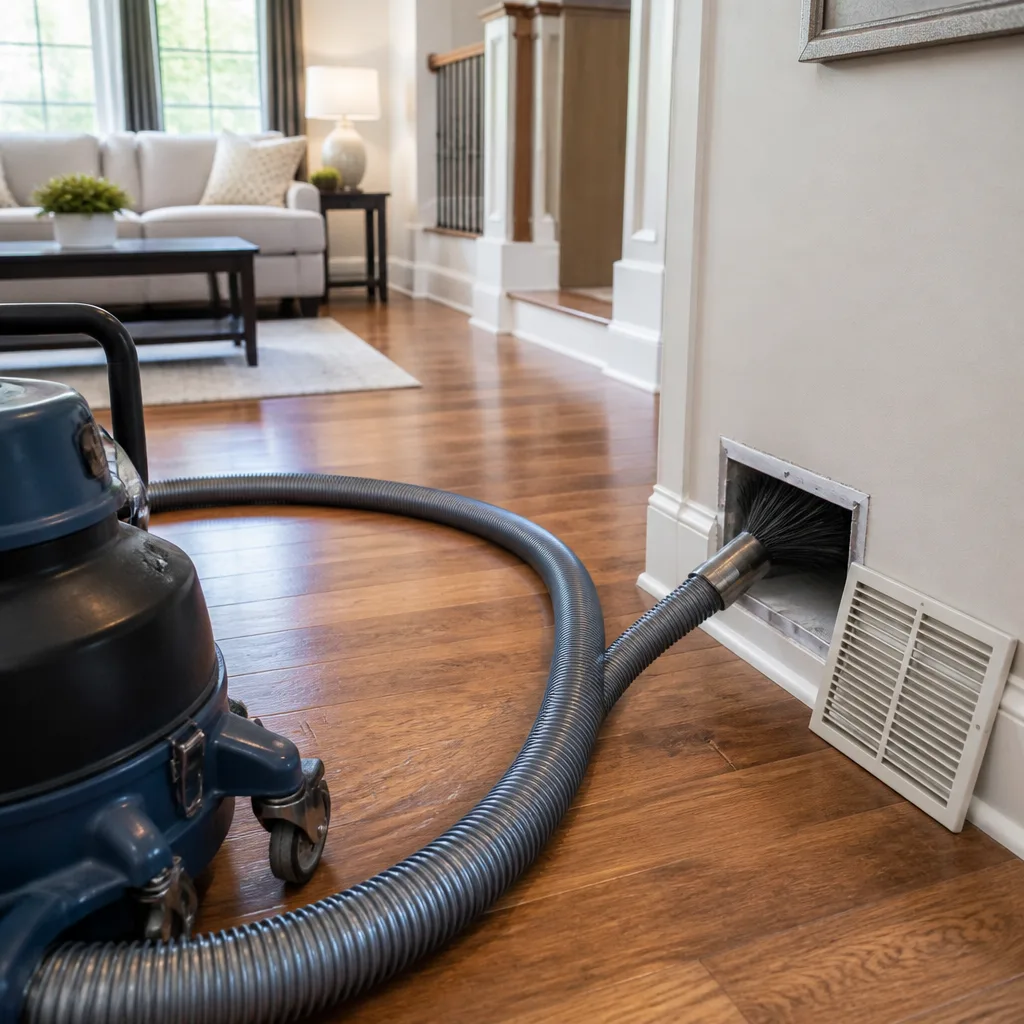 Whole-home duct cleaning
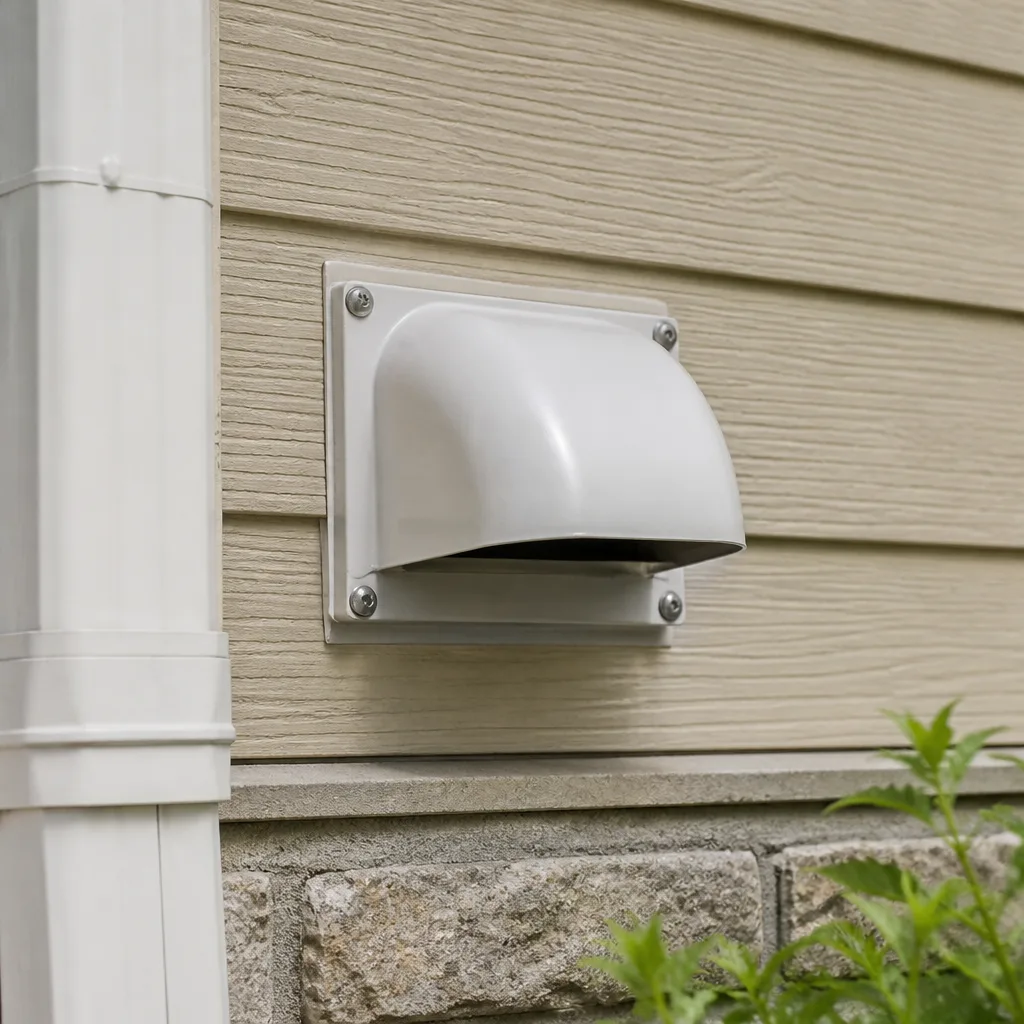 Dryer vent cleaning
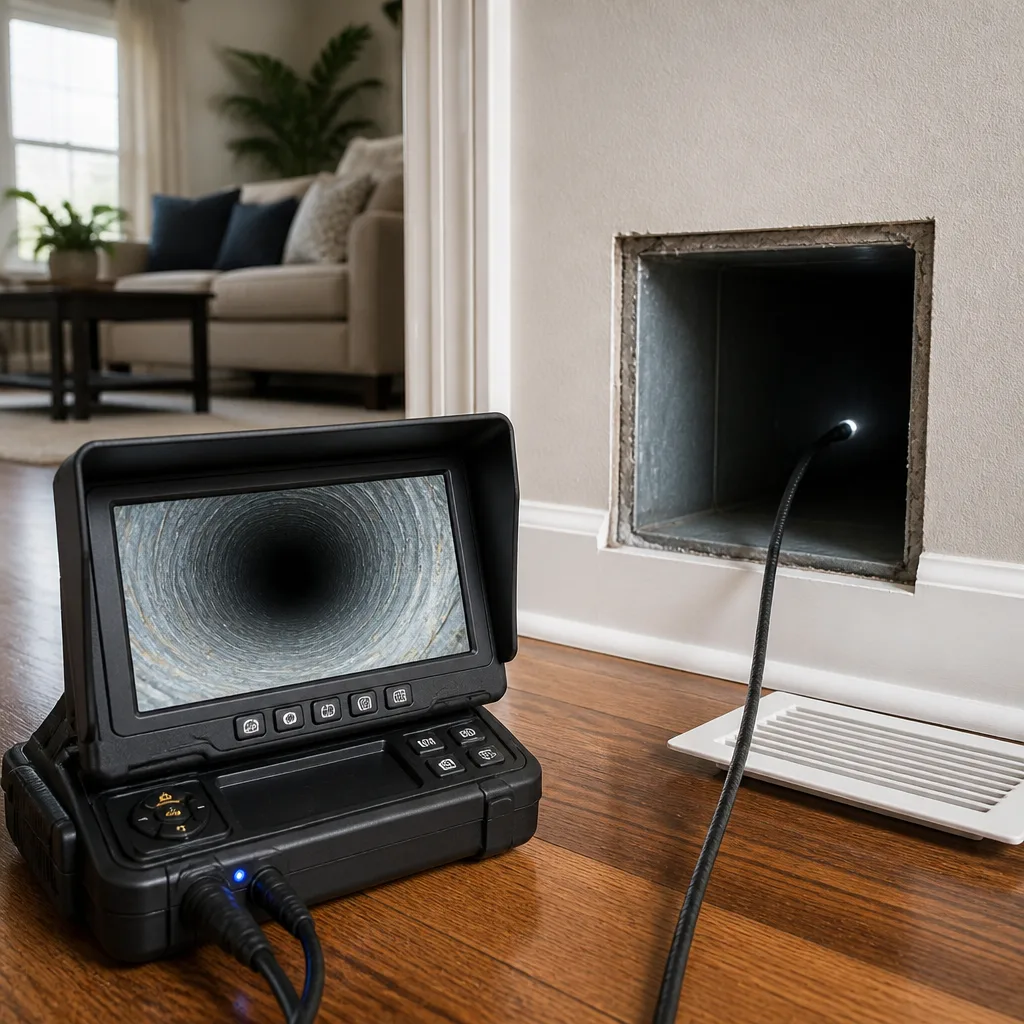 Camera inspection
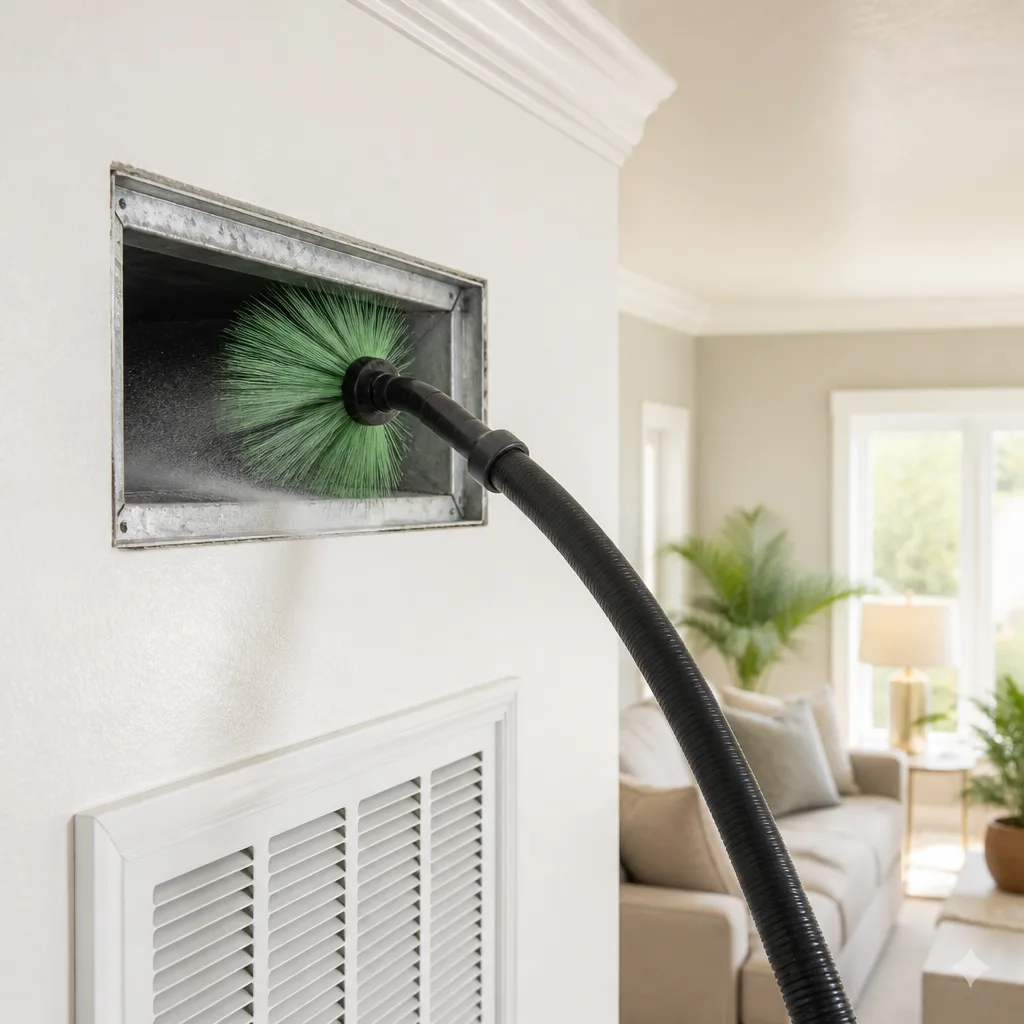 Sanitizing & deodorizing
Whole-system duct and dryer vent check with before-and-after photos - you see exactly what came out of your vents
That "$99 whole-house special" is a bait ad - the real number appears once they are in your hallway, or the "clean" is a shop-vac at the register. We photograph the inside of your ducts before and after instead.
Air Duct Cleaning Warning Signs: A South Hill Homeowner’s Reference Guide
A musty smell when the heat kicks on is easy to notice. An airflow imbalance between the upstairs and downstairs of a two-story South Hill home, where one zone runs noticeably weaker than it should, is the kind of warning sign most homeowners feel but don’t know how to name. The obvious symptoms get the attention; the mechanical and airflow anomalies are what actually tell a technician where the problem lives. This guide is about the second kind. You’ll learn how to read your own system room by room, how to tell a normal startup smell from something growing in the duct liner, and how to describe what you’re observing well enough that a technician arrives already pointed in the right direction.
Quick Answer
The warning signs that matter most in a South Hill home are uneven airflow between rooms or floors, a musty smell that persists after the system has run for several minutes, filters that clog faster than their rated lifespan, dark streaking or rust at supply registers, and short-cycling or rising energy use. Any one of these is worth a look. Two or more together usually means the duct system, the coil, or both need professional attention.
Styles & brands we work with
- Whole-home duct cleaning
- Dryer vent cleaning
- Camera inspection
- Sanitizing & deodorizing
Table of Contents
- Airflow Asymmetry: The Sign Homeowners Feel but Can’t Name
- Musty Smell at Startup vs. Persistent Musty Smell
- Filter Loading Rate as a Diagnostic Signal
- What Your Supply Registers Are Telling You
- Short-Cycling and Efficiency Loss: A Downstream Symptom
- After Renovation or Pest Activity: A Special Case
- Dryer Vent Warning Signs Most Homeowners Miss
- How a Technician Actually Diagnoses a Duct System
Airflow Asymmetry: The Sign Homeowners Feel but Can’t Name
The single most useful thing you can do before calling anyone is a room-by-room airflow comparison. It takes about ten minutes, needs nothing but a strip of tissue or a piece of light paper, and gives a technician a map of where the system is starved. Here’s how to run it:
- Turn the system to fan-only so the blower runs without heating or cooling cycling on and off.
- Hold a strip of tissue against each supply register, one at a time, and note how far the tissue deflects. Photograph each one if you can.
- Record the result room by room. Compare rooms on the same floor first, then compare floors.
- Repeat the same test at each return grille to see how much air is being pulled back.
What you’re looking for is distribution, not raw strength. A system that delivers even, moderate airflow everywhere is healthier than one that blasts the front room and whispers in the back bedroom. When a room that used to be comfortable now runs weak, or when a whole upper floor lags behind the ground floor, that points to something physical: a disconnected duct run, a crushed flex section behind drywall, a damper stuck partway closed, or a run that has simply filled with debris over time. In two-story South Hill homes, where supply trunks run long distances through unconditioned attic space, those weak zones are common and often fixable. If the imbalance disappears the moment you close a few registers elsewhere, that’s a sizing or pressure problem rather than a cleaning problem, and a technician should know that before they arrive.
Musty Smell at Startup vs. Persistent Musty Smell
Some musty smell at the first heating cycle of the season is normal. Dust settles on the heat exchanger and in the ductwork during the off months, and when the system warms up, that dust bakes off. It should fade within a few minutes of runtime and it shouldn’t return mid-season. If the smell lingers the entire time the system runs, or comes back every time the blower engages, that’s a different signal.
A persistent musty odor usually means moisture is finding something to grow on. The two usual suspects are the fibrous liner inside the ductwork and the evaporator coil. Both stay damp if drainage is poor, if the system runs short cycles that never fully dry the coil, or if humidity in the home stays high through the summer. Growth on the coil spreads through the whole air stream; growth in the liner stays put and keeps seeding the air every time the blower runs.
Distinguishing the two matters because the fix is different. Duct cleaning with a contact-cleaning system can strip contamination from the liner, and our equipment includes Abatement Technologies units built for contamination containment, so debris and spores get captured rather than redistributed through the house. A contaminated coil usually needs its own cleaning as part of HVAC cleaning. Describe the smell, when it appears, how long it lasts, and which rooms it’s strongest in. That single description saves a lot of diagnostic time.
Filter Loading Rate as a Diagnostic Signal
Your filter has a rated lifespan. Most are rated for about three months of typical use. If you find yourself replacing yours every three or four weeks, the filter isn’t the problem; it’s doing its job. The question is what’s loading it so fast.
When a filter clogs ahead of schedule, the duct system is contributing particulate the filter was never sized to handle. That particulate comes from somewhere: dust pulled in through return-side leaks in unconditioned space, debris breaking loose from contaminated duct interiors, or a return path that’s drawing from a crawlspace or attic. A filter that turns uniformly gray in a month is telling you the system is moving a lot of material. A filter with one dark corner and clean edges is telling you something different: air is bypassing the filter frame, which means unfiltered air is reaching the coil.
Either way, checking filter loading rate monthly for a season gives you a baseline. Write the date on the filter edge in pencil when you change it. Once you know your normal, a sudden change is easy to spot, and it’s one of the most reliable early warning signs available to a homeowner. If your system is loading filters unusually fast, a cleaning and a leak check will usually explain it. Upgrading to a properly matched media cabinet, using Honeywell or Aprilaire components sized to your blower, is often the right long-term fix once the source is cleaned up.
What Your Supply Registers Are Telling You
Supply registers are the only part of the duct system you can inspect without tools, which makes them worth a close look. Pull the grille cover off one or two and use a flashlight. Here’s what to check and what each signal likely means:
- Black or gray streaking around the register frame. Often called ghosting, this is fine particulate being pushed out past a poorly sealed register boot and depositing on the wall or ceiling around it. It signals a gap between the boot and the drywall, plus enough airborne material to mark the surface.
- Rust staining on the register or the surrounding drywall. Moisture is condensing somewhere upstream. Common in South Hill homes where attic runs sweat in cold weather or where a coil pan isn’t draining cleanly.
- Debris type in the register pan. A thin, even film of dust is normal. Coarse grit and drywall dust suggest recent construction. Fibrous gray material suggests liner breakdown. Dark, clumped material suggests moisture has been present.
- Visible mold-like spotting on the register face or the visible duct interior. Stop inspecting and call a professional. Disturbing growth without containment spreads spores through the home.
Photograph what you find. When a technician sees ghosting on the second-floor registers in a home with an attic-mounted trunk, they know to check boot seals and flex connections before they start cleaning, and that shapes the whole visit.
Short-Cycling and Efficiency Loss: A Downstream Symptom
Short-cycling is usually treated as an equipment problem. Often it isn’t. A blower wheel caked with dust moves less air than it was designed to, a contaminated coil transfers less heat, and the system compensates by running longer or cycling more frequently to hit the thermostat setpoint. Homeowners notice the symptoms before they understand the cause: rooms that never quite reach temperature, a system that runs constantly on mild days, or utility bills that climb without any change in habits.
Restricted airflow from a loaded coil or blower is the most common non-mechanical cause of that pattern. It also stresses the equipment. A blower working against high static pressure runs hotter and harder, and the compressor works longer to move the same amount of heat. Cleaning the air pathway, the ducts, blower, and coil, restores the system’s design airflow, and the cycling behavior usually settles back to normal. That’s the same logic behind air duct cleaning: it isn’t cosmetic work, it’s restoring the operating conditions the equipment was built for.
Schedule the cleaning before the diagnostic service call. If the system still short-cycles after the air pathway is clean and the filter is fresh, then you’re looking at a mechanical fault and a technician can focus on that directly. Doing it in the other order often means paying for a diagnosis that leads back to a cleaning.
After Renovation or Pest Activity: A Special Case
Two events turn a normal duct system into a contaminated one: a renovation and a pest intrusion. Both push material into the ducts that no filter is designed to catch in volume, and both are worth addressing directly rather than waiting for symptoms to appear.
During renovation, drywall dust, sawdust, insulation fibers, and construction debris settle into duct interiors and return plenums. Standard filters capture almost none of it; the fine fraction passes straight through and coats the coil and blower. If your home has had significant work done and the system wasn’t capped and sealed during the project, a post-renovation cleaning is the standard response.
Pest activity is different in kind. Rodents and insects leave droppings, nesting material, and contamination behind in duct runs, especially in attic and crawlspace sections. That’s remediation-level work, and it calls for containment: negative-air machines holding the work area under pressure so nothing escapes into living space while the duct is opened and cleaned. Our equipment includes Nikro HEPA-rated negative-air units and Abatement Technologies containment gear for exactly this scenario, and Guardsman-brand protection products applied post-cleaning add a documented treatment step. If the ducts have had pest activity, say so when you call. It changes the equipment and the protocol from the first minute.
Dryer Vent Warning Signs Most Homeowners Miss
A clogged dryer vent is a fire risk, not just a performance annoyance, which is why dryer vent cleaning is treated as its own service rather than an add-on. Most providers who only clean HVAC systems don’t touch it. The signs are easy to learn and worth checking monthly:
- Clothes take noticeably longer than usual to dry, requiring a second cycle for a normal load.
- The dryer feels hot to the touch on top or at the door during operation.
- The exterior vent flap barely opens, or doesn’t open at all, when the dryer runs.
- The lint screen fills faster than it used to, or lint is visible around the lint trap housing.
- A musty or burning smell in the laundry area while the dryer runs.
- Lint visible at the outside termination point or around the vent hood.
Any one of these is reason to have the vent inspected and cleaned. A vent that’s long, has multiple elbows, or runs through a cold attic space is more prone to buildup and worth checking more often. If you can’t remember the last time the vent was cleaned, the answer is usually that it’s due.
How a Technician Actually Diagnoses a Duct System
Diagnosis starts before the equipment comes out. A homeowner who can describe what they observe, air imbalance by room, smell timing, filter loading rate, register streaking, gets a more precise answer on the first visit.
Common Mistakes to Avoid
- Judging duct condition by the register face alone. A register can look clean while the trunk behind it is packed with debris. The visible surface is the least informative part of the system. Ask for before-and-after documentation of the interior.
- Over-filtering to compensate for dirty ducts. A high-MERV filter on a system with restricted ductwork raises static pressure and can strain the blower. Match the filter to the system’s rated capacity and fix the source of the loading first.
- Ignoring a persistent musty smell because “ducts always smell a bit.” Startup dust burn-off is normal. A smell that stays all season isn’t. Call for an inspection before the growth has the whole season to spread.
- Skipping the dryer vent because the laundry still dries. The vent can be half-clogged and still get the job done, while the risk builds. If the load time has crept up, don’t wait for a failure.
- Letting a general contractor clean ducts during a remodel. Standard vacs and shop attachments stir up contamination without containing it. A post-renovation cleaning needs HEPA-rated negative-air equipment and containment, not a rented blower.
- Assuming short-cycling means a failing furnace. Get the air pathway cleaned and the filter changed before spending on a diagnostic call. Airflow problems and equipment problems produce the same symptoms.
- Booking a cheap one-price duct cleaning without a scope of work. If the quote doesn’t say what’s cleaned, how, and what equipment is used, the answer to your warning signs may not be addressed at all. South Hill Air Duct Cleaning will walk you through the full scope before you schedule.
See the difference
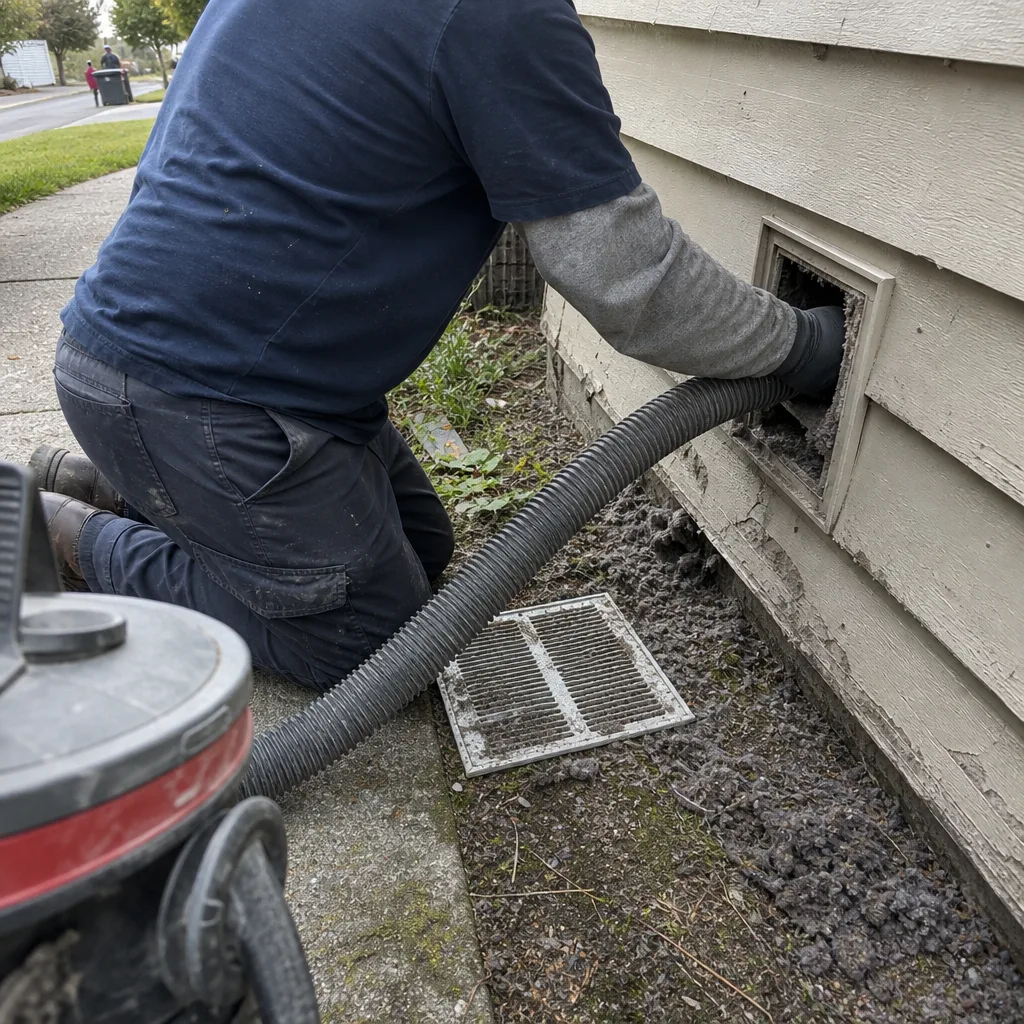 Before
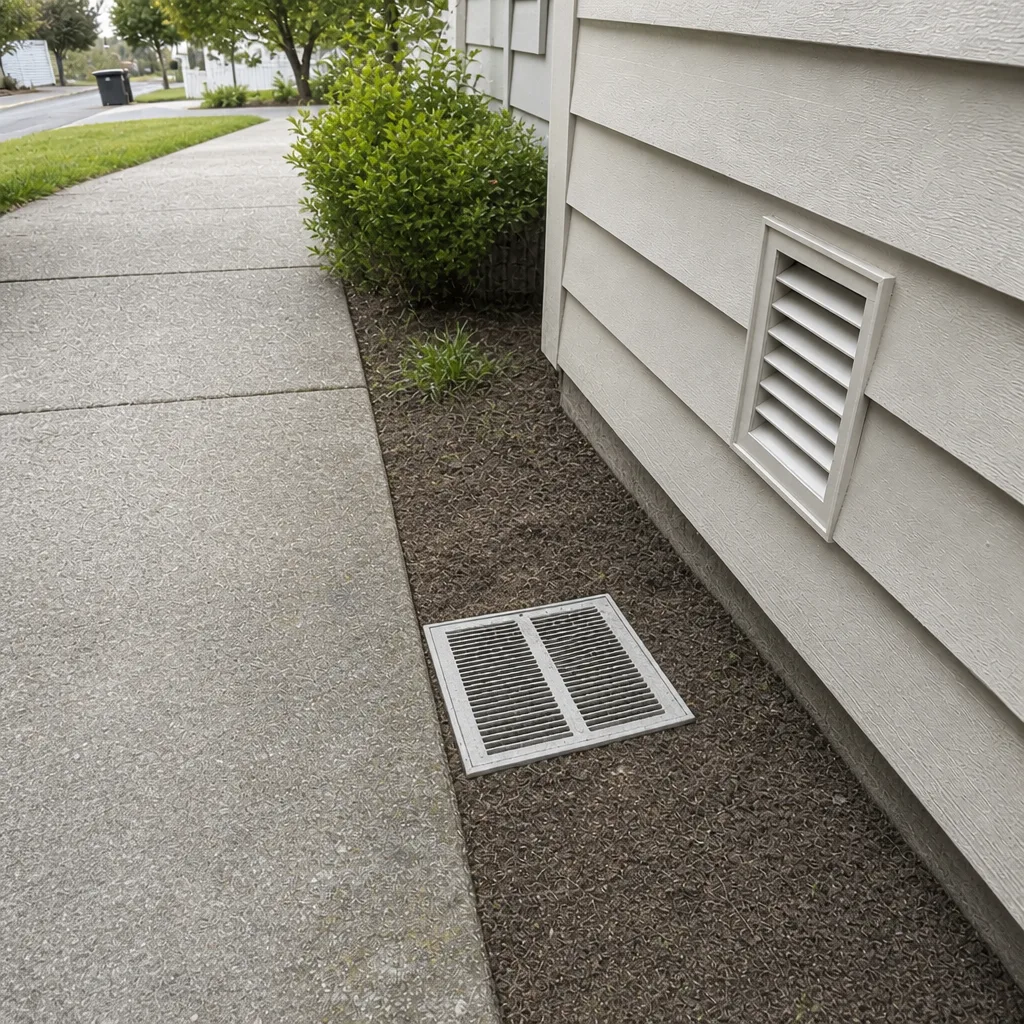 After
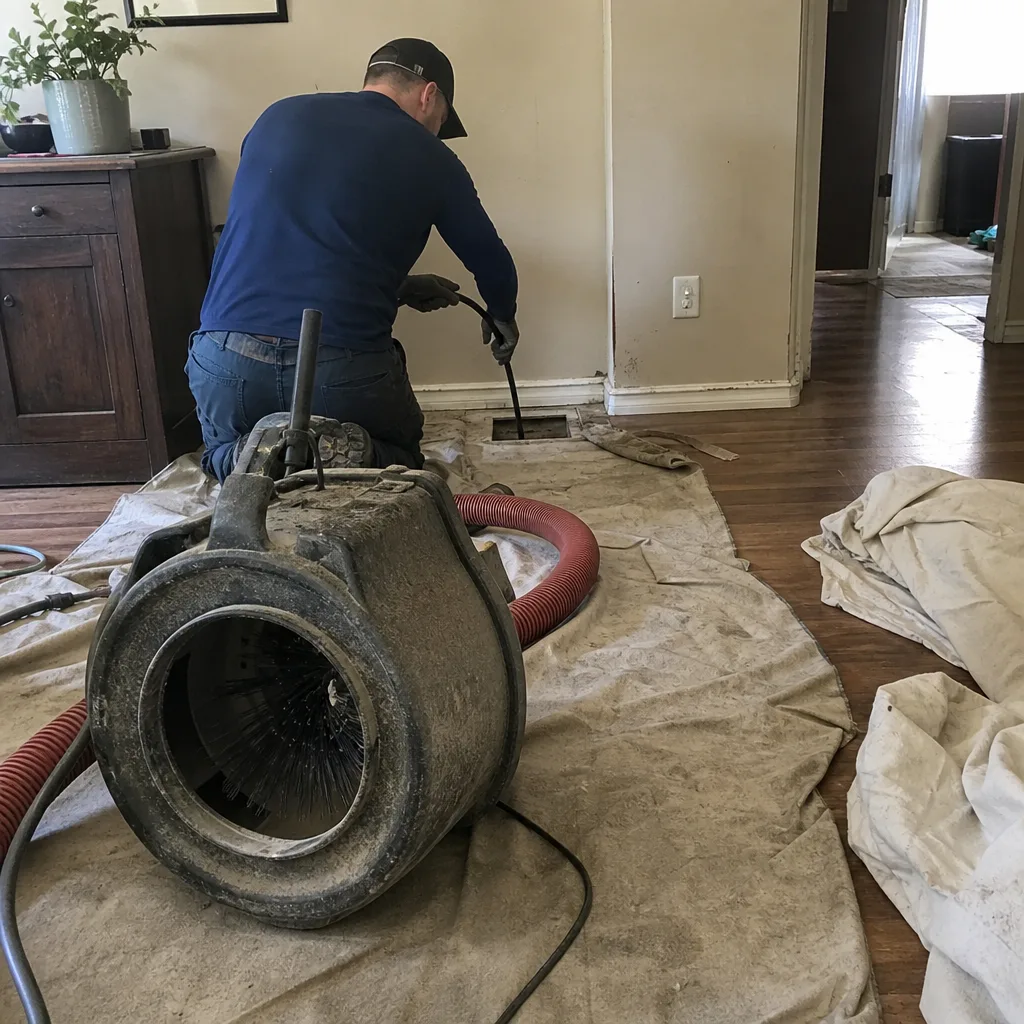 Before
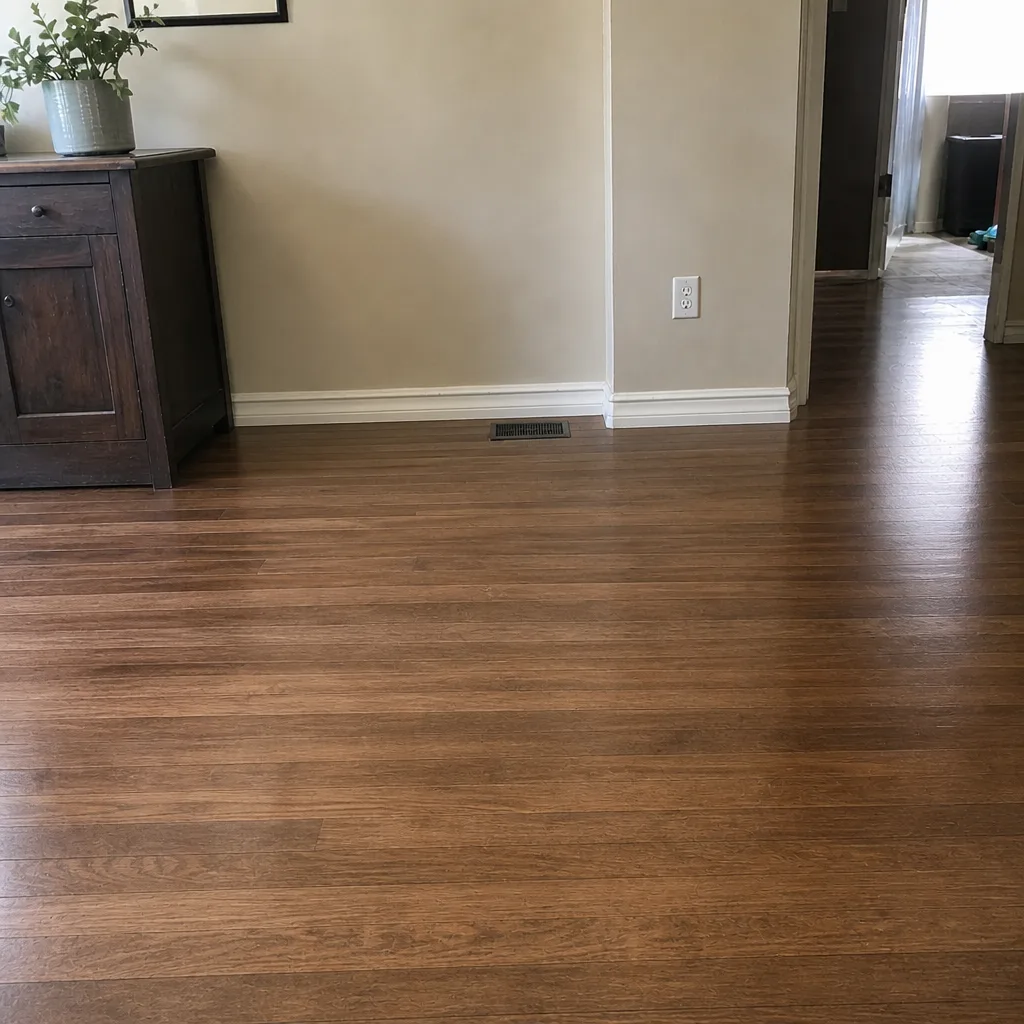 After
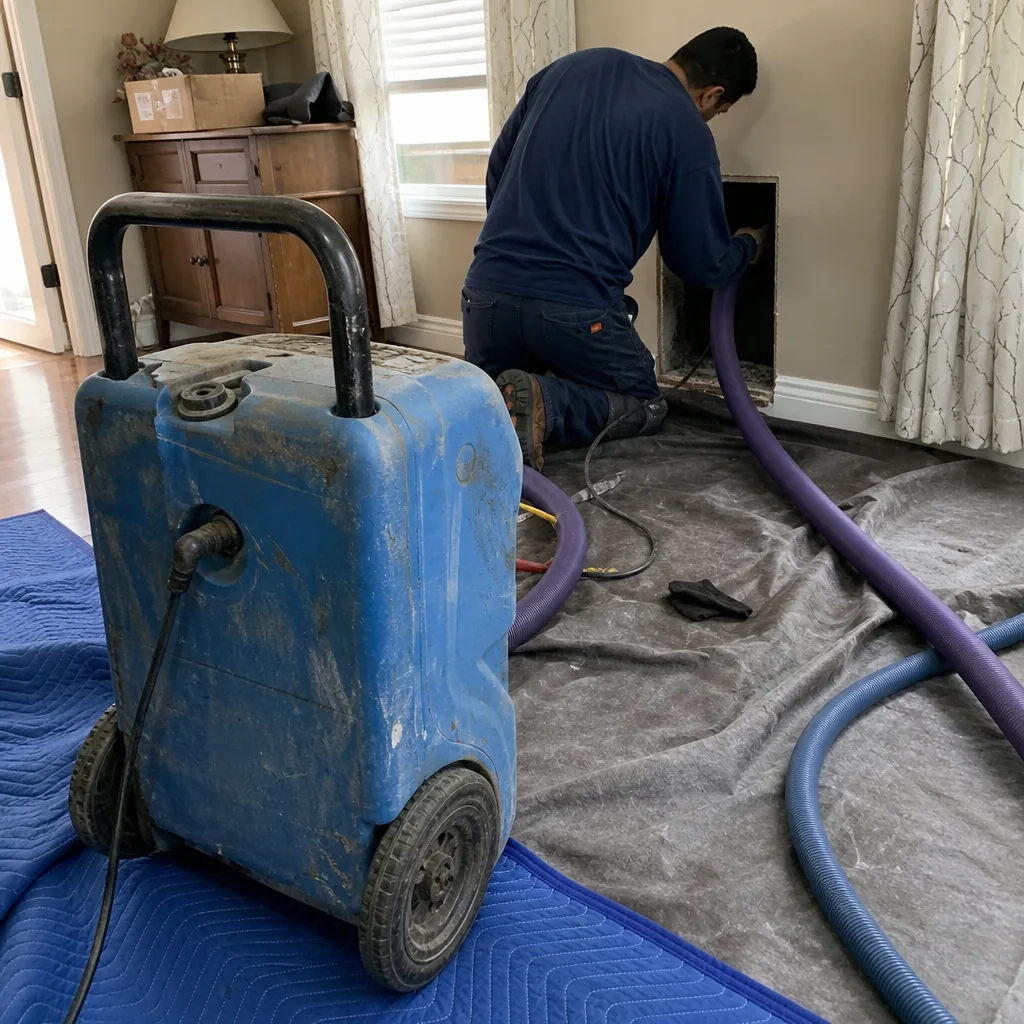 Before
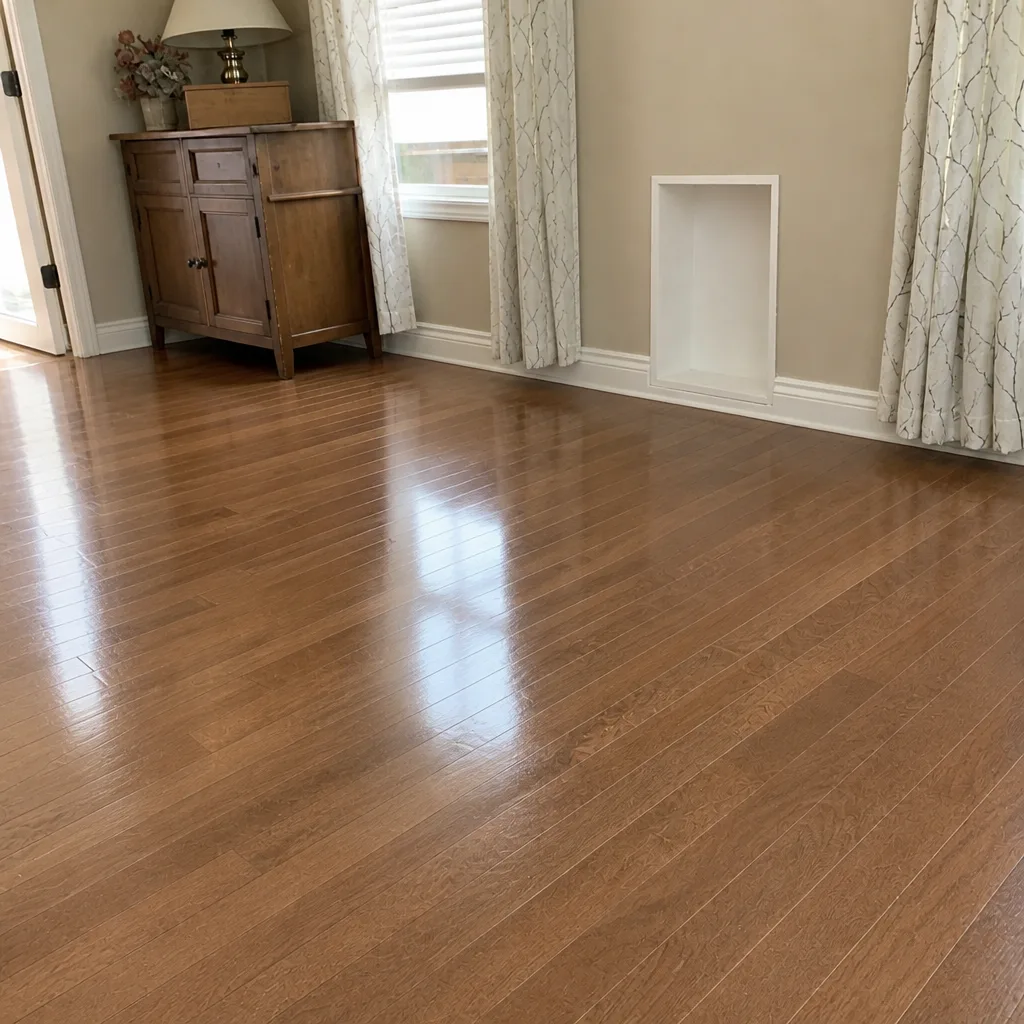 After
When to Call a Professional
Call a professional if any of the following is true: airflow is noticeably uneven between rooms or between floors; a musty smell persists past the first few minutes of runtime or returns mid-season; your filter is loading ahead of its rated lifespan; you see streaking, rust, or fibrous debris at registers; the system short-cycles or energy use has climbed; the home has had a renovation or pest activity; or you can’t recall the last dryer vent cleaning. Our technicians have up to 14 years of experience reading these signals and we document conditions before and after so you know exactly what changed. South Hill Air Duct Cleaning offers free estimates in South Hill. Call (855) 510-1735. We answer 24/7. Fast dispatch from 7am to 7pm, Sunday through Friday.
Frequently Asked Questions
Most South Hill homes do well with a cleaning roughly every three to five years, and some go longer if the system has been sealed and filters changed on schedule. The interval shortens after renovation, pest activity, or if you have pets or allergy concerns in the household. Watch for the warning signs in this guide rather than going strictly by the calendar; they’re a better indicator than a fixed schedule.
Cost depends on the size of the system, the number of supply and return runs, the level of contamination, and whether duct repair or sealing is needed. Rather than quote a per-vent number that grows later, we give one flat price per system before any work starts, based on what we find on the inspection. Call (855) 510-1735 for an exact quote, estimates are free.
Cheap quotes are usually per-vent prices, an entry figure that rises once the technician is on site and sees the actual system, or they cover a vacuum pass with no contact cleaning of the duct interior. That’s not a price you can compare to a fixed whole-system quote. Ask any provider what equipment they use and whether the price is per vent or per system. If the answer is vague, the final invoice will be too. Call (855) 510-1735 and we’ll give you one flat price per system before we start.
Ask for before-and-after photos of your own ductwork and the register interiors, and ask the technician to walk you through what they found and what they cleaned. Documentation is the difference between a cleaning and a promise. We photograph conditions before and after on every job so you can see exactly what changed. Call (855) 510-1735 to schedule an inspection and an exact quote.
A smell that fades within a few minutes of the first heating cycle is normal off-season dust burning off. A smell that persists while the system runs, or that returns every time the blower engages, usually indicates growth on the duct liner or evaporator coil. If yours is persistent, call (855) 510-1735 for an inspection before the season gives it more time to spread.
Sometimes it’s the whole fix, and sometimes it isn’t. When a loaded blower wheel or contaminated coil is restricting airflow, cleaning restores design airflow and the cycling usually settles back to normal. If the system still short-cycles after a cleaning and a fresh filter, the issue is mechanical and a technician can focus on that directly. Call (855) 510-1735 for an exact quote on a whole-system cleaning.
The Bottom Line
The warning signs worth tracking are the mechanical and airflow ones: uneven distribution between rooms and floors, a musty smell that doesn’t fade, filters loading ahead of schedule, streaking or rust at registers, and short-cycling that no amount of thermostat adjustment fixes. Those describe a system working harder than it should, and they point a technician toward a fix on the first visit. For South Hill homeowners, the practical move is a room-by-room airflow check once a season, a filter-loading baseline written on the filter edge, and a call when any of these signs stack up. Cleaning, repair, sealing, and dryer vent service handled together keeps the whole air pathway in shape rather than just the duct.
If the warning signs are there, don’t wait for a failure. South Hill Air Duct Cleaning offers free estimates in South Hill. Call (855) 510-1735. We answer 24/7. Fast dispatch from 7am to 7pm, Sunday through Friday. We’ll tell you what we found, show you the photos, and give you one flat price per system before work starts.
Written by the team at South Hill Air Duct Cleaning.